
Another day too long to talk about in more than annotations…
Category Archives: Uncategorized
(CSA) Update
This message was sent to our CSA member this past weekend.
Greetings!
We were taking it (sort of) easy this weekend though those of you following us on Facebook know that doesn’t mean we haven’t been out back working. We got the insect netting up over the greens, radishes, and beets, and planted out about 60 Red Zeppelin onion plants. Rock on!
We had a big week in other ways as well. Wednesday evening, Dan and I were interviewed by a writer from Edible Columbus for an article in the Summer issue due out in June. She’d love to have a chance to chat with some of you to know how and why you got involved in this little venture. She plans to drop by one of our next work days. (See below for more on that).
We also learned that our service learning grant at OSU was approved. This means we’ll be working Kerry Ard and her students in “People, Place, and Environment” on various projects next spring. The grant comes with $1,500 for the farm and we are thrilled about the prospects!
Knowing that Edible Columbus will be sending a photographer soon, we are eager to get a few more big things done around the property next weekend – build our compost system, move some of the sod piles around and out of site, dig a great big hole for an underground cistern, complete laying out and tilling the new beds, install some of our trellising. Join us next Saturday (between 10 and 5) and/or Sunday (noon-6) to help make it happen. Please let us know in advance if you plan to attend and when we might see you. This helps us plan and match activities best with those who’ll be showing up.
Namaste,
jodiK
Another Busy Day Over the Fence
Another busy day that’s left me exhausted. Here’s what happened…
So that’s the cold hard facts. Analysis and reflection coming soon. Nightie night.
My Oh My, What a Wonderful (Work) Day!
I’m too tired to write. You can see for yourself just why.
Farm Sweet Home
Cora and I skipped town for a few days before the farm is really up and running for the season. Dan’s taking care of things while we’re away. Naturally, he’s doing great. Still, it’s hard being away. I’m wondering how the seedlings Cora and I transplanted are doing and which seeds are germinating. I’m wishing I had my hands in the soil, though the sand feels pretty good between my toes. We’ll be back soon enough. The apple trees will have (finally) arrived. The compost will still be sitting in the driveway waiting to be moved. The honeysuckle will be begging to be pulled up. The compost bin will be crying to be built. The list of chores will get longer everyday, and it will all be beautiful.
What a (Wet) Week!
It’s been raining cats and dogs around here for three days.
Thankfully, Dan and super star CSA member Larry Hughes did some work earlier in the week to extend and rebuild drainlines that kept all the work we’d done establishing our beds from washing away.
Next up on the water front: Dan wants to bury a cistern to collect the water coming from the sump. Those tanks are more expensive and harder to come by on Craigslist than the large scale food grade tanks that can sit above ground so we’ll have to wait and see on that one. (Unless you have a lead to offer!) But we can, relatively easily, add some plants to the easement to filter the driveway runoff. Happy to no longer have all that oil and synthetic auto stuff running into the yard. Wonder if it will show up in the soil testing…

Sump pump drain repaired after being impaled by a fencepost.
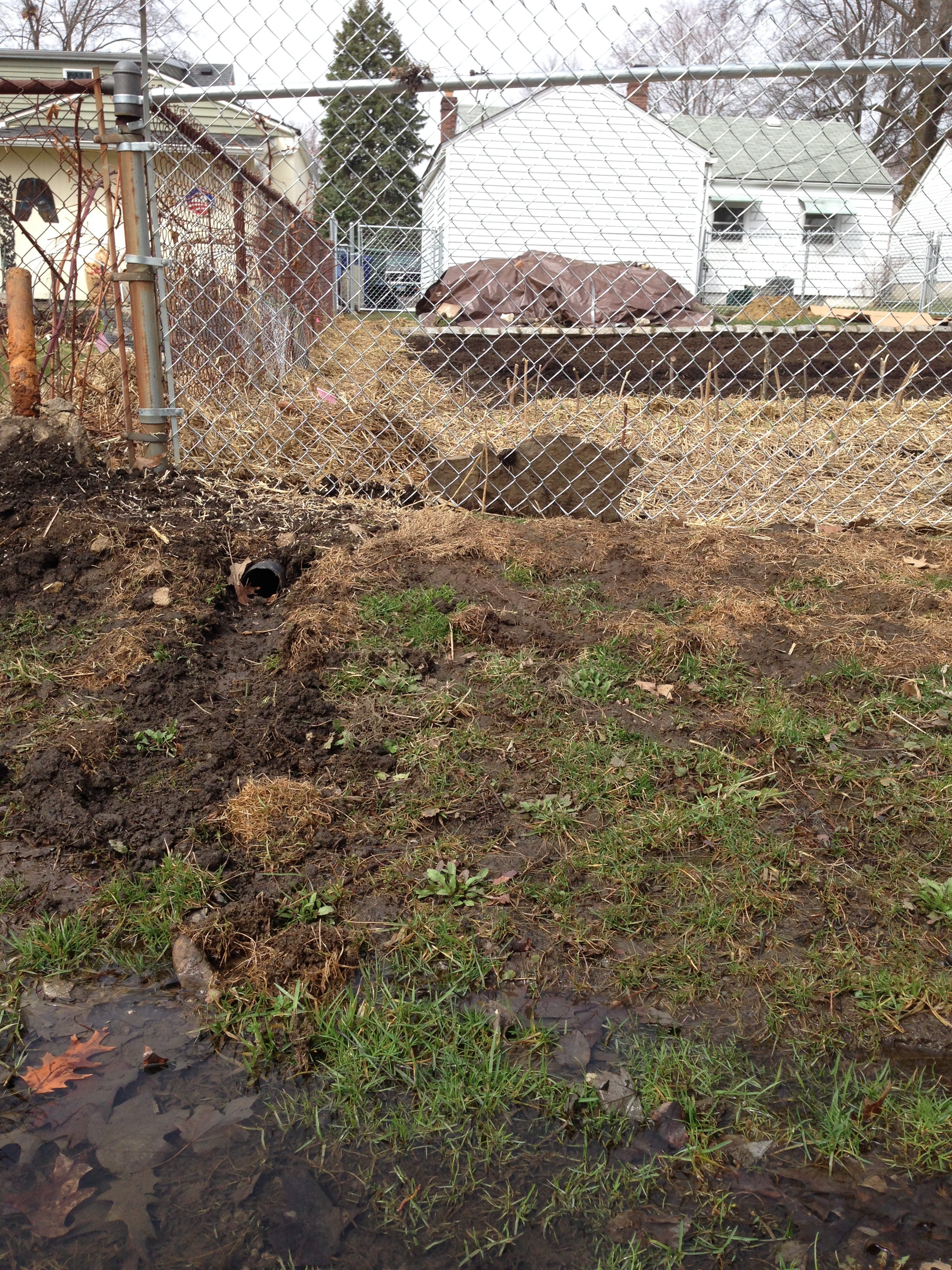
Pipe running from a driveway drain that ended at the top of the farm space now runs to the easement.
All About Compost
We compost our kitchen scraps, fallen leaves, and other assorted yard waste. We add it to our beds in the spring. But we don’t produce nearly the quantity, or quality, that we can get from commercial producers. A few years ago, we feel in love with a local product we found at City Folks Farm Shop called Zoo Brew from Price Farm Organics in Delaware, OH. Here’s how they describe it:
“An all natural and unique compost comprised from cafeteria food remnants, zoo manure and bedding, brewery salvage, pet food remnants, yard trimmings & coffee grounds. Abundant in nutrients and humus. Excellent for use as a mulch with a natural black color. Both new landscape installations and older landscapes needing some fresh attention will benefit from this excellent compost.”
A few weeks ago, we had ten cubic yards of this black gold delivered to our driveway.
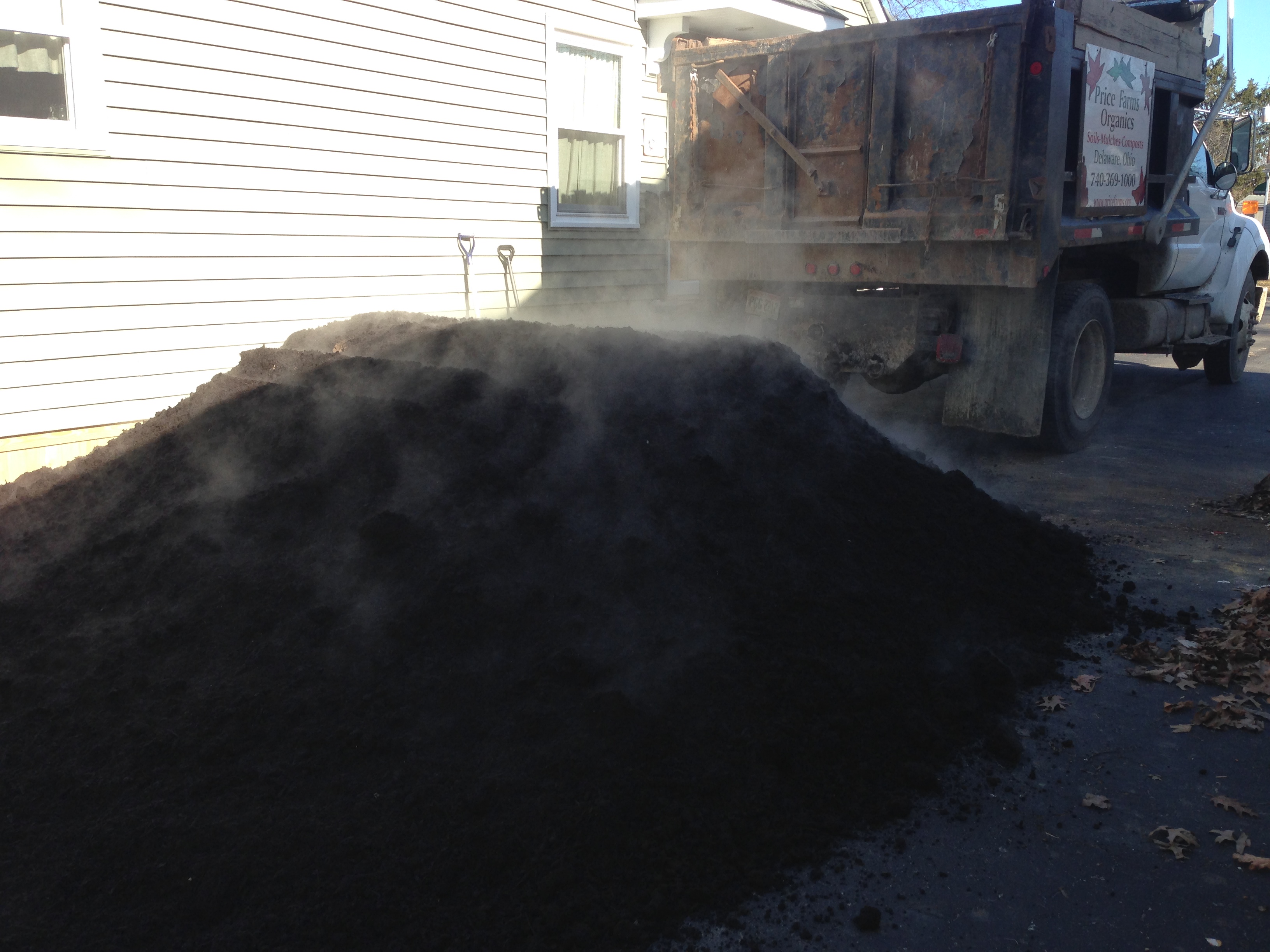 Yesterday, we started hauling it onto the farm. Beginning with the beds that will be planted first – greens, onions, herbs and flowers for our “bee highway.” Soon, perhaps even today, we’ll till it together with the first foot or so of topsoil. After weeks of going back and forth on whether we would or would not till, we decided we would this year and perhaps next. In the future we hope to have built our soil structure up enough to forgo this step and use a broadfork to work new organic materials into only the top few inches before starting new crops. I can already hear the earthworms screaming, but I know their friends and family will join us soon.

CSA members Katie, Coleen, and Liam Hughes joined us to help mulch our garlic beds with Zoo Brew which will help the beds retained moisture as well as feed them some good nutrients.

It’s starting too look like a real farm out there! Looking west at some of our 27 foot beds blanketed with compost from the central path, lined with burlap coffee sacks and straw.
Introducing Our New Vole Patrol(man)
[WARNING: This post contains both supremely cute and kinda icky imagery. But it’s all real; nothing has been Photochopped folks. Understanding more each day that what it takes to get food to our tables isn’t always pretty, whether we’re talking about industrial pesticides or mousetraps. But I promise we’ll start on a positive note.
Shout outs to Melissa F. for pushing me to write about this here, and to Courtney at Milking Chickens who wrote so openly about her recent encounter with some stillborn goats.]
Meet Thompson. We’re told he’s some kind of terrier/hound mix so we’re counting on him to be our new vole (and rabbit and mole and squirrel and …) patrolman.  He’s four months old, super sweet, and a lot nicer to have around than our previous rodent trapper…
 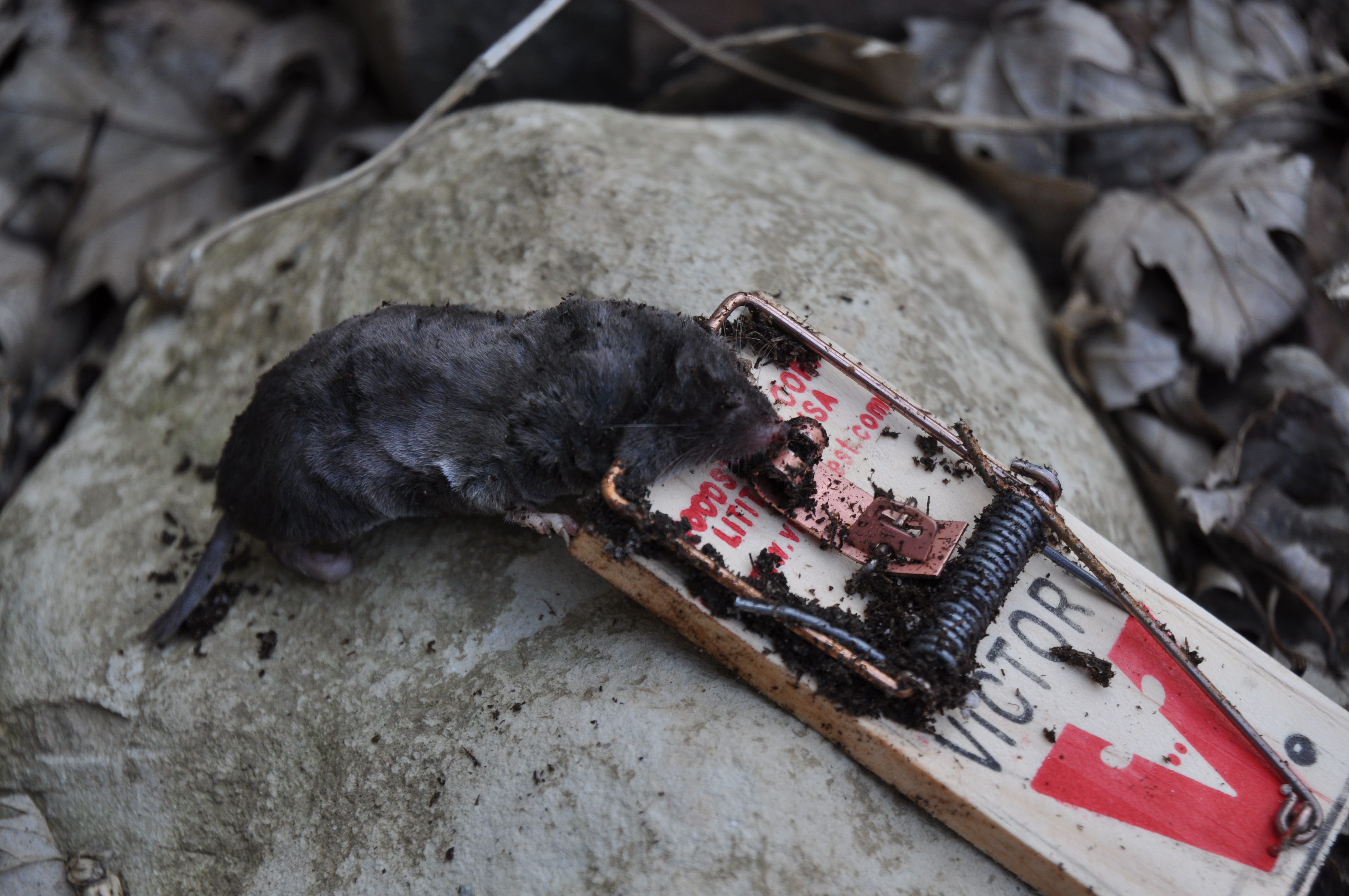 I caught this little rascal and his partner a few days after we learned about integrated pest management at farm school. I was out looking at the cold frame, checking on some seeds and seedlings I’d set out when I discovered tunnels running through the soil with a few big holes on the sides. I knew immediately that we had a problem and unlike in the past, I wasn’t willing to live with it. It was us against them. I ran to the hardware store, picked up some mousetraps, and set them out with a bit of peanut butter bait. Within 12 hours I’d caught my first furball. I immediately reset the trap and within 2 hours caught another. We haven’t had any problems since then.
I have never killed a mammal before. Caterpillars, ants, beetles, stinkbugs for sure, but nothing with ears, and eyes, and claws. Nothing with body parts that resembled my own. My initial reaction was a combination of nausea and elation. But the more I read about voles, the less guilty I felt.
See, for example, this from Wikipedia:
“[Voles] can have five to 10 litters per year. Gestation lasts for three weeks and the young voles reach sexual maturity in a month. As a result of this biological exponential growth, vole populations can grow very large within a very short period of time. Since litters average five to 10 young, a single vole can birth a hundred more voles in a year.”
I figure catching these two saved me, and Thompson, from having to catch another 98. I’m sure he’ll find someone else to chase down.
Quick Hoop Hooray!
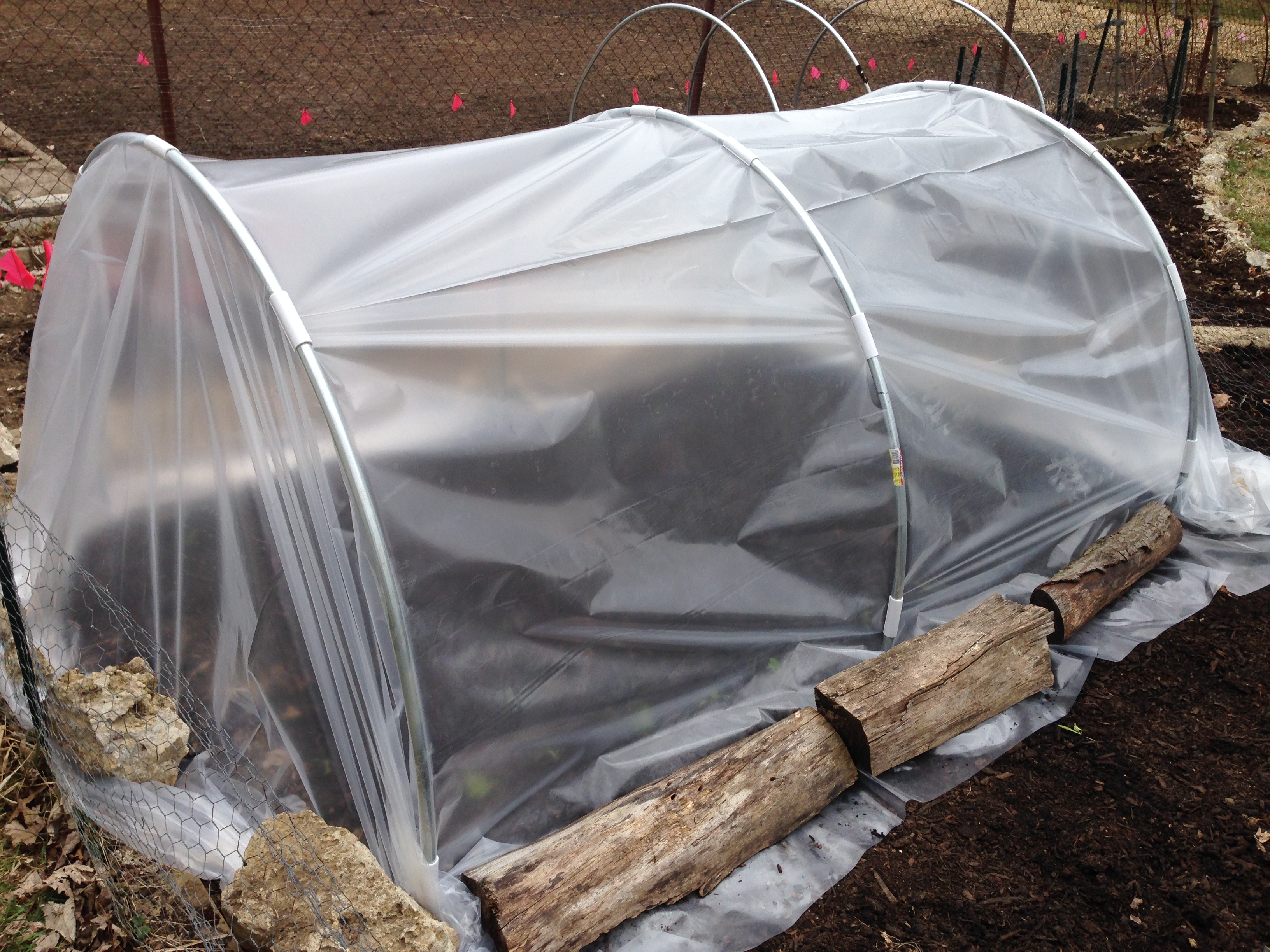
Thanks to some help from a few good friends, we got our first quick hoop (or low tunnel) planted out and erected today. It isn’t on the farm property since it’s still too cold and damp to till the new beds on that side of the fence, but this experiment will certainly inform the work we do there in the fall and next spring. This hoop covers 2/3 of one of the raised beds we’ve been using at the house. Today, we loaded it with spinach, mizuna, beets, and kale for an early spring salad mix. If all goes well, we’ll have a few fresh greens for our Passover seder plate.
Hoping to make a journey to Peace, Love, and Freedom Farm this week for a tutorial on venting these mini greenhouses. Thanks in advance, Milan!
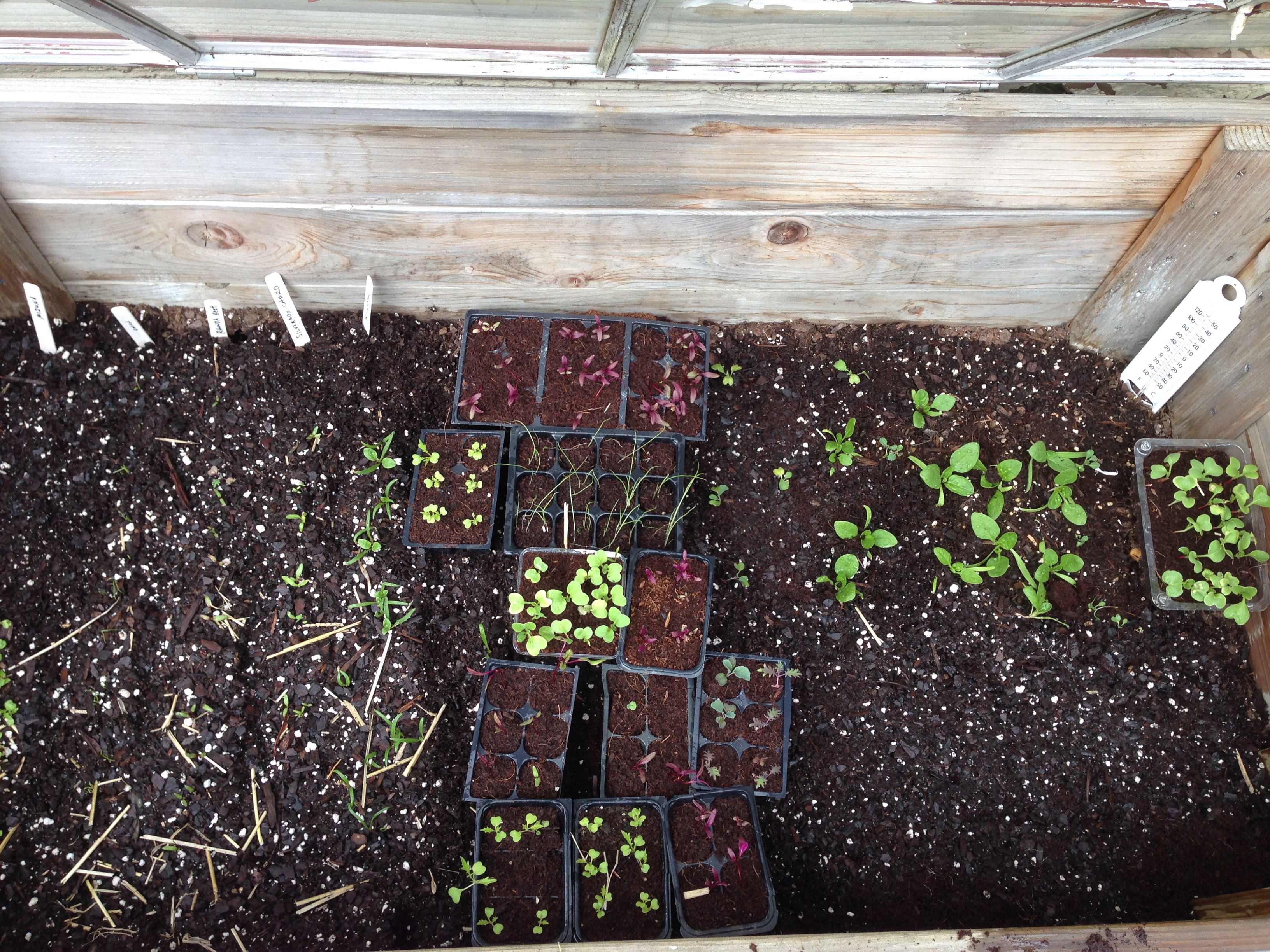
With another cold snap expected over the next few days, we took things slow and left lots of starts in the cozy cold frame. Just about the best box of jewels we can imagine.
Farm School Farewell
I have spent a LOT of my life in schools – as a student, as a teacher, as a student again. And so, I returned to the ivory tower, albeit the backyard, for The Ohio State University’s College of Food, Agricultural, and Environmental Sciences Ohio Master Urban Farmer Certificate Program with a mix of enthusiasm and apprehension.
I have been reading a gazillion books, blogs, and extension fact sheets in advance of the 2014 growing season. I have learned so much from these resources and wondered how much more I could possibly learn in a 21-hour program. Turns out I learned a lot, the least of which is how much more there is to learn. As with any educational experience, the presentations in this series opened windows for me onto issues and ideas I’ll need to spend more time exploring on my own. Now I know more of the questions I need to ask, even if I can’t answer them right now.
As a doctoral student you learn to be an autodidact. You have to. Noone else is studying the exact same thing as you. Same goes for artmaking and, it turns out, urban farming.

Receiving my certificate of completion from Dean Bruce McPheron. Must note I did not do a formal diploma hand-off for either my Master’s of Doctoral degree so I had to chuckle at the formality of this scene.
[I would be remiss not to briefly mention the topics of our last session of farm school. Good Agricultural and Handling Practices (GAPS), zoning, and legal issues related to urban farming. I hope to complete a full GAPS training program later this year to ensure that our produce is the highest quality it can be and safe for whatever lucky folks wind up consuming it. I also learned a few things about what we clearly can and cannot do in the name of urban farming within the boundaries of the City of Columbus. Best advice of the night: Be sure your project looks as beautiful as it can be to ensure neighbors don’t get upset with you and, add talk to your insurance provider about options for food activity coverage.]
 Over the Fence Urban Farm