Over the Fence Urban Farm

Cooperatively farming small patches of Earth in Columbus, OH


3 Comments

Farming. My Misogi?

“We’ve evolved with a desire to challenge ourselves…How can you reach the edge of your potential without risking failure?”

Marcus Elliott
(Harvard-trained sports scientist who enjoys all-night jogs)
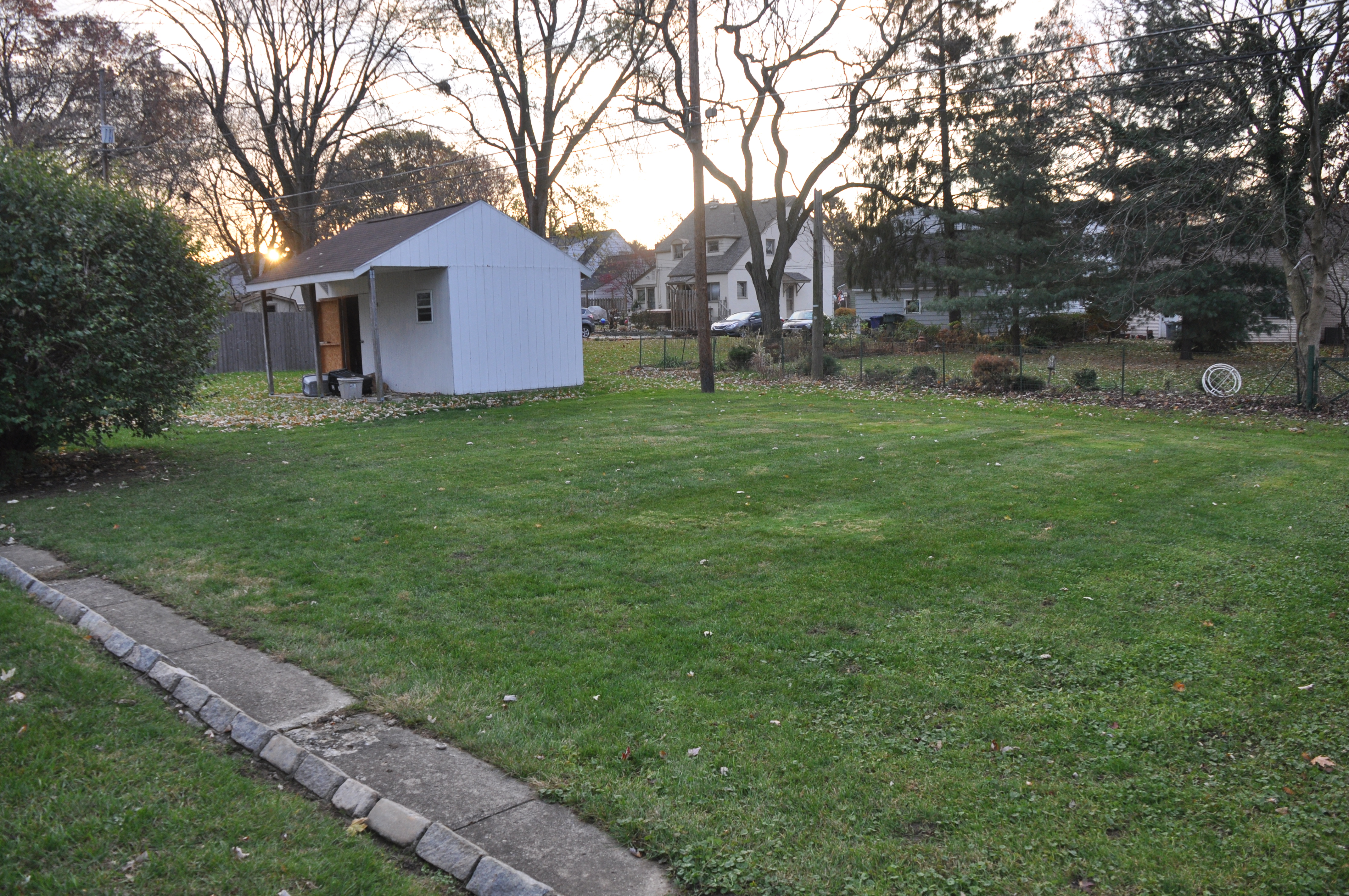
DSC_0085Before.

I came across this quotation at the gym the other day in Outside. It was part of an article about Atlanta Hawks’ 3-point shooter Kyle Korver and his friends’ annual misogi events. Misogi is an ancient Japanese concept with many interpretations. They all suggest some form of personal challenge that leaves the practitioner cleansed and refocused. This year Korver and his gang completed an underwater 5K relay carrying 60+ ad 80+lb rocks. (Insane, I know. Read the article for all the details.) I’m not sure how Japanese adherents to the more customary interpretations would feel about this, but that’s a topic for another blogger.

I’m an exercise addict, but I’m only physically competitive with myself. This seems to underline lots of Outside content. As I was reading about Korver, etal’s endeavors, I found my mind wandering to the farm. This time a year ago, I was planning for Over the Fence for the first time. I really had no idea what I was in for, but I approached my tasks with discipline and intention. By the end of the season I was so proud of what I had accomplished, including leading a group of folks to help me ensure that all these things got done!

Another of Korver’s mates said of completing a misogi “It’s this W—a win—you have in your back pocket. That can translate to somewhere else. You can say: ‘I have no idea what I’m doing now, but I know I did this crazy thing over here.’ ”

This has been an incredibly challenging year for our family in many, many ways. I’m sure that the success I found on the farm gave me energy to address responsibilities in other areas of my life. Perhaps it’s time to formalize my Spring 2015 goal of spreading our compost in a single day. Let’s make that the Over the Fence misogi. Rain or shine? It’s compost time! (Well, probably not in the rain, but you get my meaning.) Let’s do this.

(Date TBA).
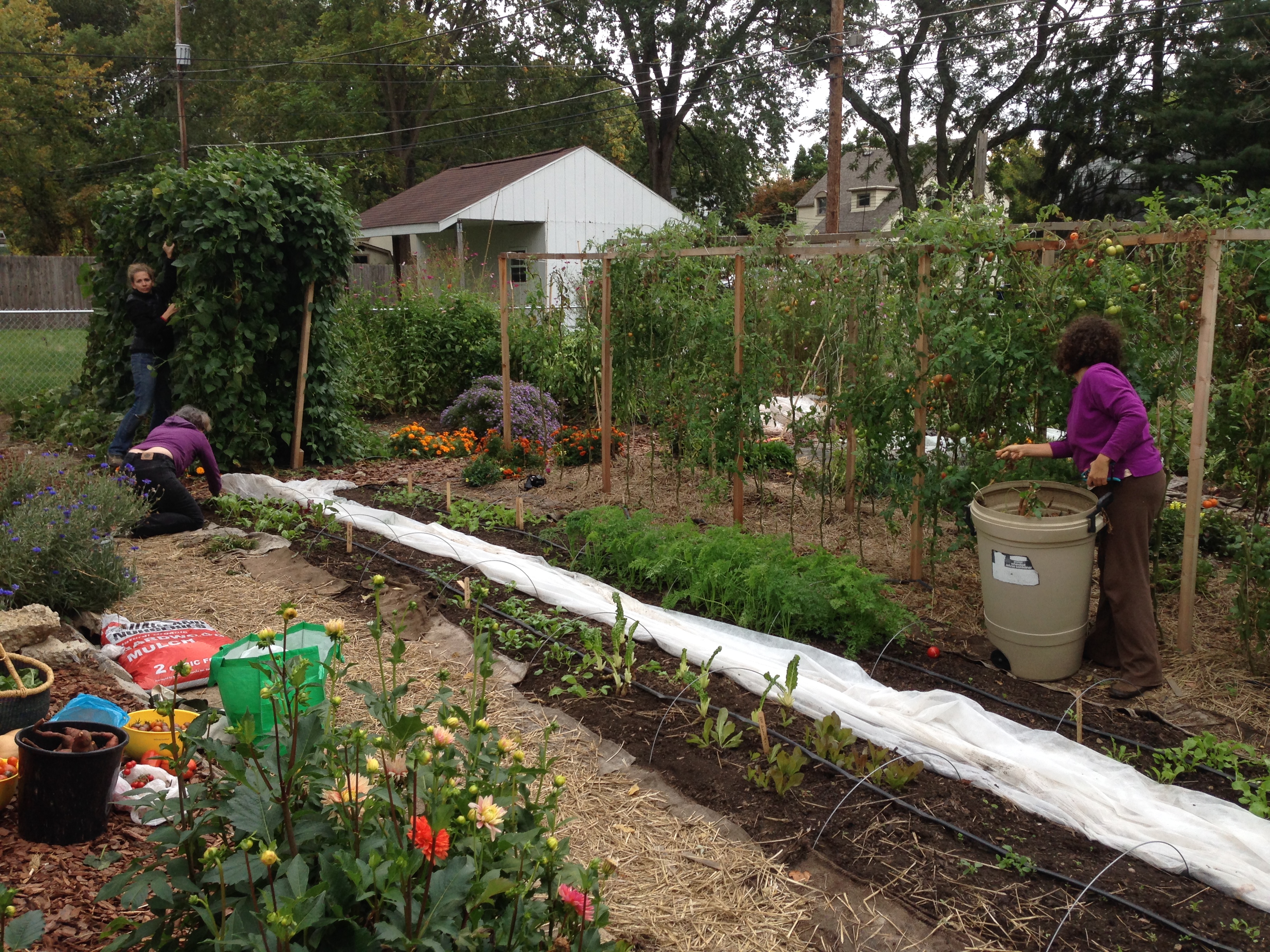
IMG_7909After.


Leave a comment

Farm School Grows On

Put 40 amateur urban farmers in a room with an Extension Educator to talk about vegetable production planning, and it’s bound to get personal. Everyone has a pet product they want to know how to grow better. And so it was Wednesday night at farm school. One person asked why her onions never get much bigger than a golf ball. Another wanted to know what was eating her radishes. I wanted to know how to keep the flea beetles off my arugula.

Jacqueline Kowalski, who also led our session on soil, did a nice job balancing these queries with her prepared remarks about vegetable production planning, tomato production (yes, this was a presentation onto itself – they are that popular!), and plant nutrition. As with all the other sessions, I heard some things I knew before, but from a new perspective, and had my mind opened to new things I’ll need more time to consider and explore.

Jacqueline likes to teach through problems and for this session she presented us with questions we answered by looking up information in the Johnny’s Selected Seeds catalogue. I found myself drifting from the assignments – for example, “You have an order for 500 Wee-B Little, 500 Snowball, and 500 Baby Bear pumpkins. How many plants do you need to grow?”or “What are the best lettuces to grow in the summer?” – to drooling over the season extension supplies featured in the back of the book. I returned to the group consciousness for the answers to our assigned questions and learned some new strategies for reading the seed catalogues and analyzing and selected varieties to grow. Then, when I got home I placed a great big order for row covers and and other supplies that have been on our list through Johnny’s website.

We talked at length about starting seedlings, intercropping, succession planting, crop rotation, and fertilizers. So much interesting and useful information to refer back to and share with you all as the season grows on.  Hard to believe, but next week is the last session of farm school.


Leave a comment

Top Five Farm School Tips on Pests and Pollinators

photo

This week’s farm school session was by far the best yet. Denise Ellsworth was the most dynamic instructor we’ve had and the three hours whizzed by. (The art educator in me is convinced this is in some way related to the fact that she started her college career as an art history student.) Denise had so much information to share she ran out of time, which was kind of a bummer. Some of what she shared was a little unnerving – there are so many natural threats to a good harvest – but in this game it’s best to know your enemies. Thankfully, she provided lots of resources we can use to get started on the right foot, to expand on what we’ve been doing well, and make changes as we move forward. She also taught us a thing or two about our allies. I can’t wait to use some of these tips to more effectively lure the bees from the hive down the block to our yard. (Thanks, Jen and Tim, for letting them come over to play!)

Here are the top five things I took away from the evening:

If you see fungus, it’s too late to treat it.
If you want to have a healthy garden, you have to take a long-term and proactive approach to pest management. This includes understanding the culture of your landscape – “how actions impact balances and relationships.” There is so much happening beneath and around our plants that we need to be aware of. Too often we focus too intently on the plants themselves. Attention to drainage, air flow, and crop rotation are examples of areas for pro-action.

Banish old tomato plants from your kindgom.
Most backyard compost piles don’t get hot enough to kill the diseases and pests tomato plants can accumulate over a season. It’s not worth risking next year’s crop by holding onto any part of these plants. Pull roots completely and remove all fruit and foliage from beds as soon as the harvest is over. Bury the remains somewhere in the yard a foot down or put them in the trash. (Need to find out whether they can be put out for city yard waste pickup. Do their piles get hot enough or are we just spreading the disease throughout the city?)

Embrace your inner scientist.
Scientists’ work develops from observation-based questions. Come this spring I’ll be “scouting” for problems in the garden everyday, then exploring options for addressing them. For example, if I see insect “frass” (aka bug poop), I’ll follow the trail and see where it leads and take action based on what I see. I’ll record the “ground truth” for weather related patterns as they arrive at our property like “growing degree days” as they pass.

Be the hostess with the most-ess.
Invite pollinators into your “insectary” and show them a good time. Find ways to provide a successive feast with at least three pollen sources spring, summer, and fall to keep them around your property rather than flying off to the next way station. That’s gonna take some research and planning. We’ll start by rearranging some of our perennials in groups and by incorporating flower beds throughout and around the the farm. This will help us create” corridors of connectivity,” or highways, for bees and butterflies to follow through your space so they don’t have to cross scary pathways where predators might gobble them up.

The more you grow, the more you need to know.
As urban farmers growing a variety of things in small spaces, we are both at an advantage and disadvantage over the large-scale, one product grower. We’ll need to learn the ideal growing conditions for a wide variety of plants. At least we won’t ever get bored.


Leave a comment

Hoops Dreams

One of the things we’re most excited about experimenting with this spring and fall are tunnels – high and low.  Tunnels are used to extend the growing and harvesting seasons. A tunnel over a garden bed creates a microclimate which magically transports the soil and air 500 miles south. So, in the spring, we can use low tunnels to get a jump on the growing season, and in the fall, we can use them to protect crops from the frost. The tunnels will behave similarly to our coldframe.

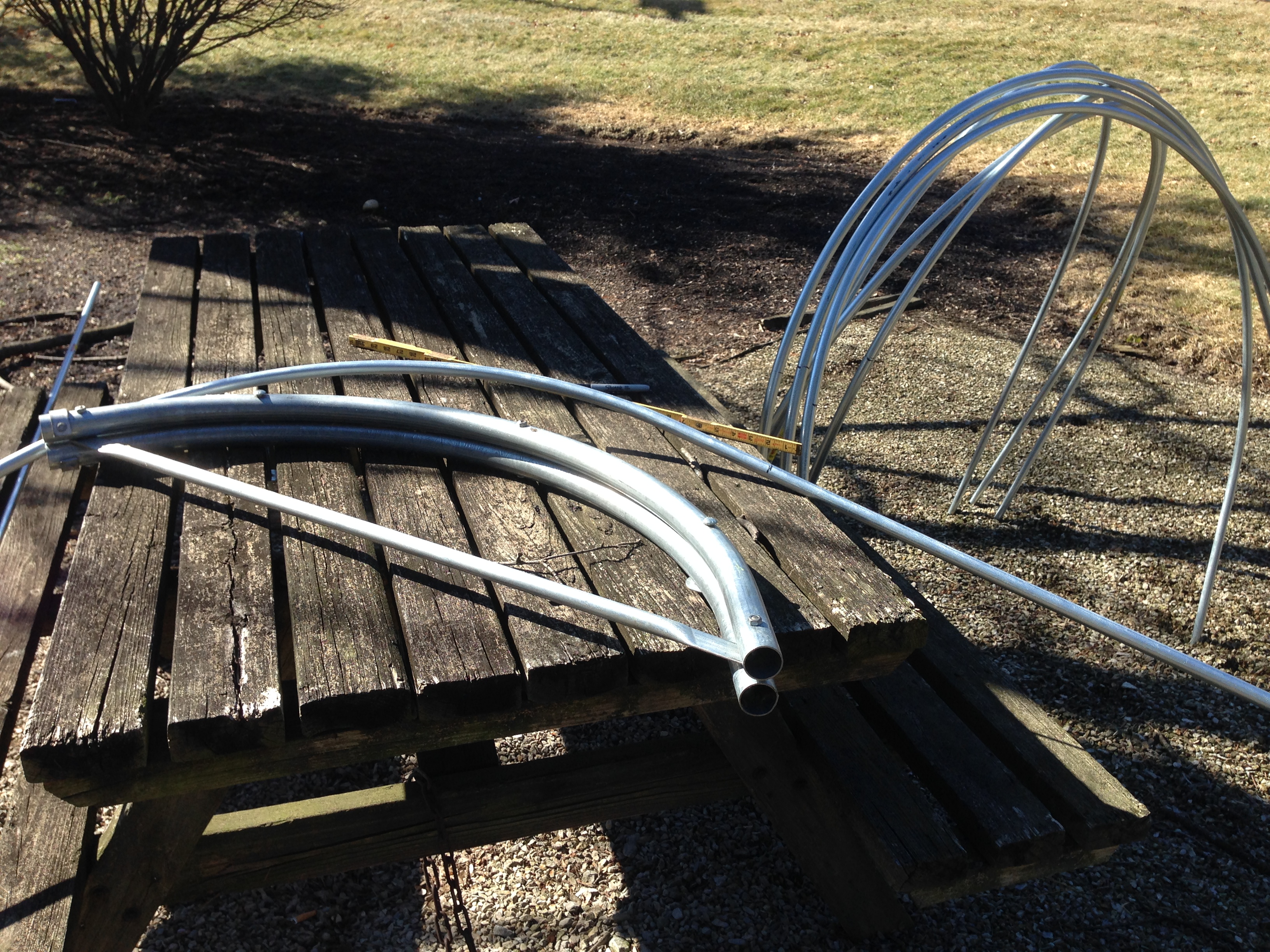
Last week, Jesse Hickman of Local Matters – Columbus’s leading non-profit dedicated to “transforming the food system” and a co-sponsor of farm school – offered to lend me a low hoop bender the organization owns. I jumped at the opportunity and made use a few recent sunny days with temperatures over 30 degrees to give it a spin. I stabilized the bender on picnic table in a green space behind a bank and a funeral home at the end of our block and set to work. Dogs from adjacent lots were barking at me and I was waiting for the bank security to come ask me what I was building. All part of the urban farming experience, I suppose.

IMG_4862As Jesse predicted, my first attempt at bending the 1/2 inch electrical metal conduit was a wonky, lopsided mess. But I quickly got the hang of it and we now possess 16 hoops 4 ft in diameter and 4 feet high. Hope to install these guys the second week in March and move some seedlings into them. Will also be experimenting with direct seeding under the tunnels. Stay tuned…


Leave a comment

Farm School: Day 2

My head is spinning from class tonight which left me wishing I hadn’t ditched so many of my high school biology classes.

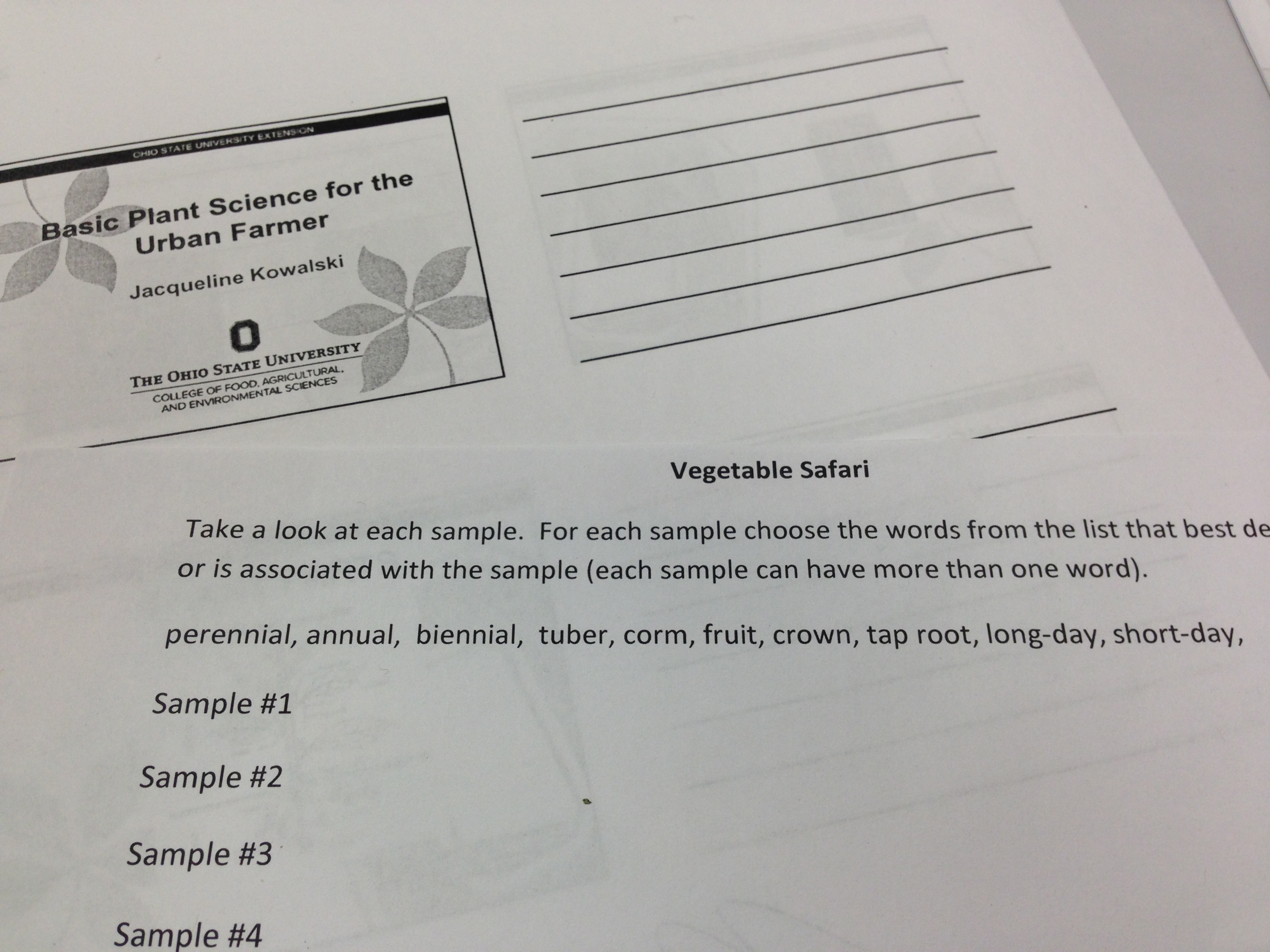
Our instructor for the evening, Jacqueline Kowalski came down from the Cuyahoga County Extension (that’s up near Cleveland from folks out of state) to give us a very quick and dirty introduction to plant science and soil quality. The three hours flew by as we worked through learning activities, like the following vegetable quiz, and listened to Jackie run through a ton of information. Lots of the terms and concepts were familiar, but I definitely walked away with a list of things I need to learn more about.

photo 1[For those of you trying this at home, the samples were beets, carrots, onions, garlic, spinach, tomato, potato, and  asparagus.]

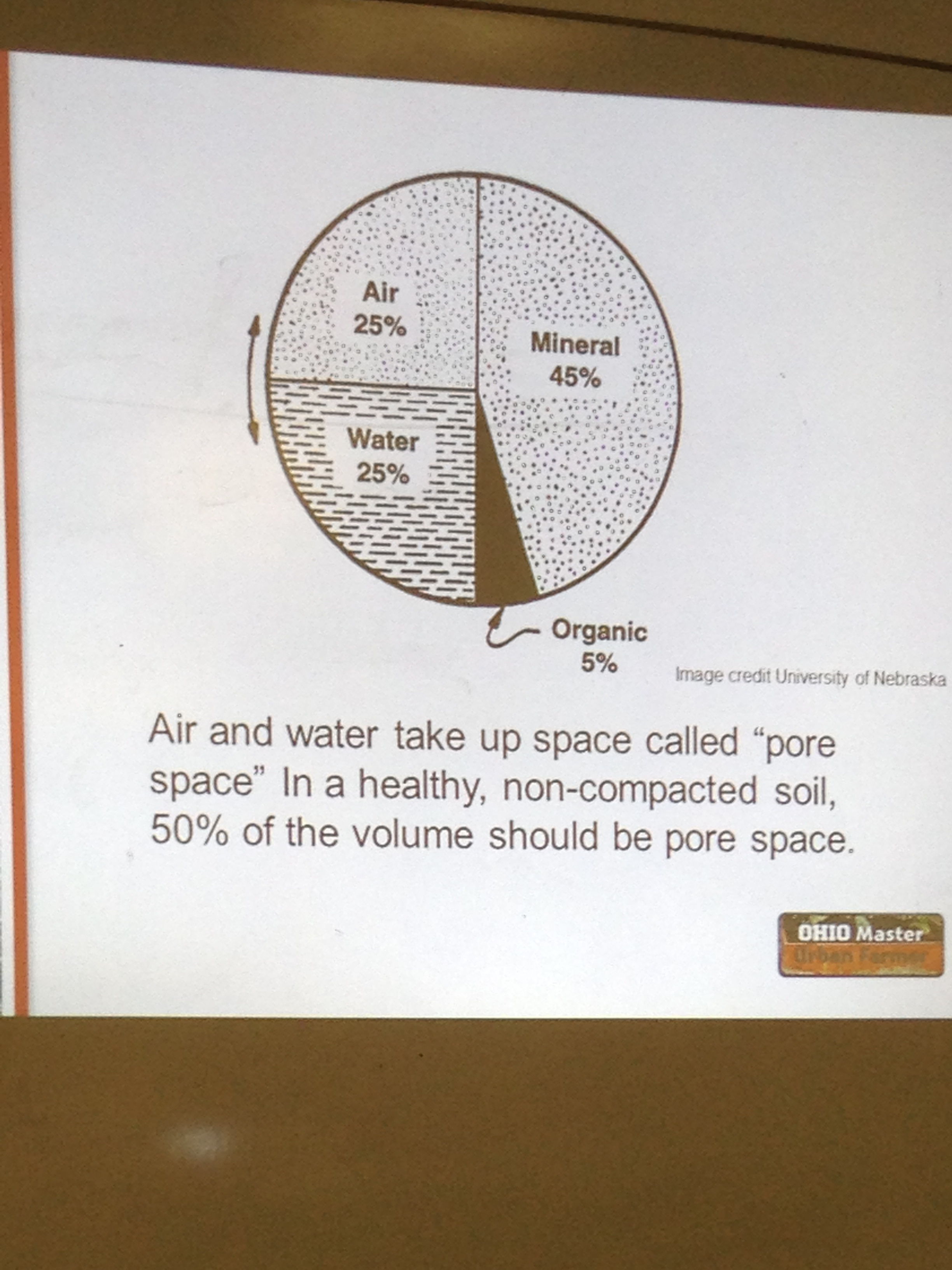
I really enjoyed the discussion of soil and can’t wait for the ground to thaw so we can have ours tested to learn what we are really working with. The chart following chart shows the general makeup of viable soil. Seeing that 25% is air really helped me understand why you shouldn’t walk on your garden beds. I’ll be showing it to the kids for sure! I also hope to conduct a “shake test” with them to explore the makeup of our soil. See how it’s done at Far Out Flora, and watch for our results this spring.

photo 2


Leave a comment

“Experience the Germination Sensation”

IMG_20140209_155838_498

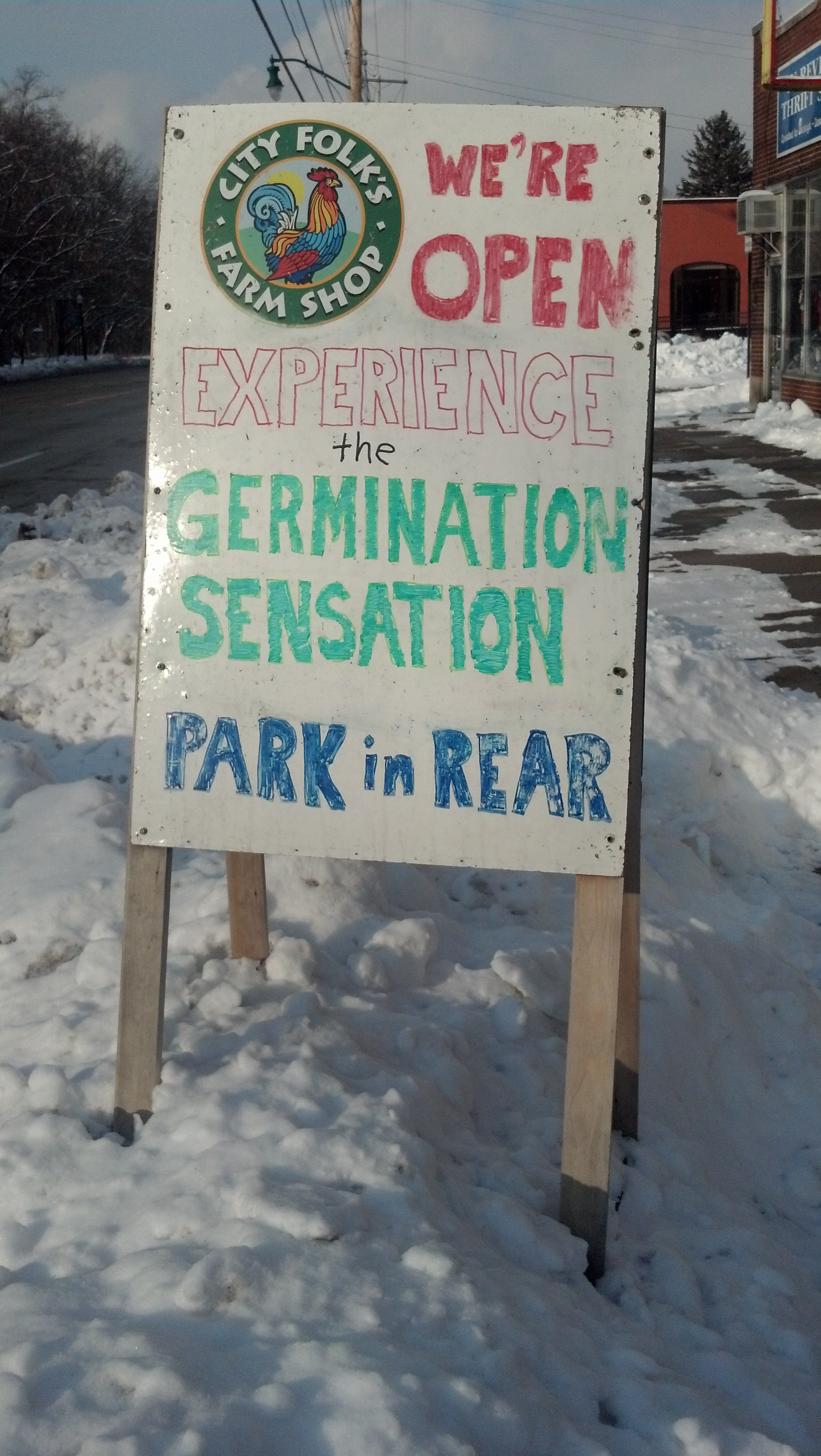
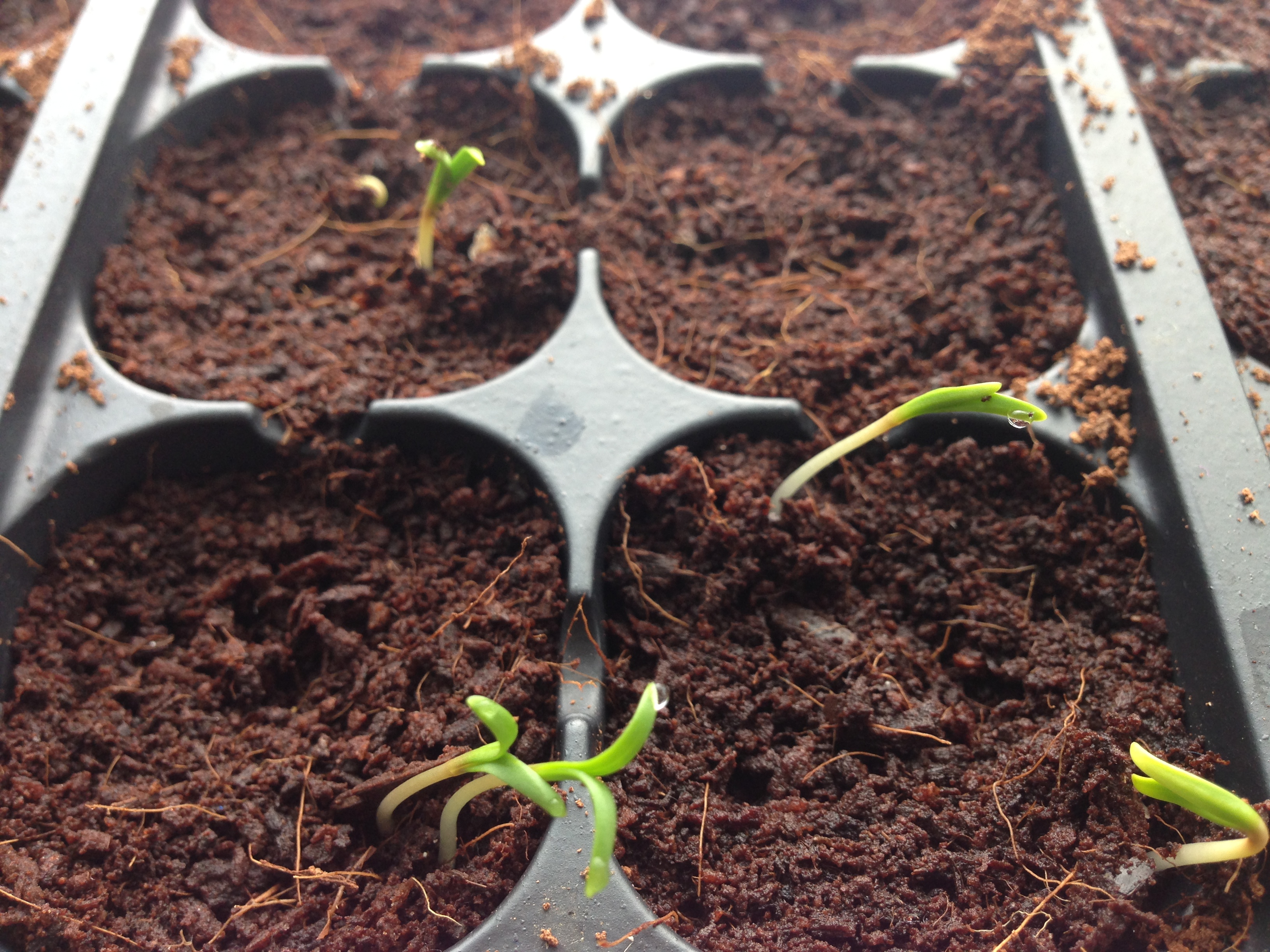
The seasonally-changing sign outside City Folks Farm Shop, our local urban homesteading store, currently reads “Experience the Germination Sensation.” It captures the magic I feel when we see seedlings peaking their heads out of the soil, or in the case of these little guys, out of the coconut husk fiber. So, the only question left to ask, “Are you experienced?”

Kale: Day 3

Kale: Day 3

Spinach: Day 2

Spinach: Day 2


3 Comments

Sowing Seeds in the Dead of Winter

“Don’t judge each day by the harvest you reap but by the seeds that you plant.”
Robert Louis Stevenson

DSC_0251

Like much of North America, we’ve been experiencing record cold temperatures in central Ohio this winter.  This has folks all over town dreaming of warmer days.  And gardens.  We’re doing more than just dreaming. We’re sowing seeds.

The past few years we’ve been planting things earlier and earlier, but this is definitely a new record.

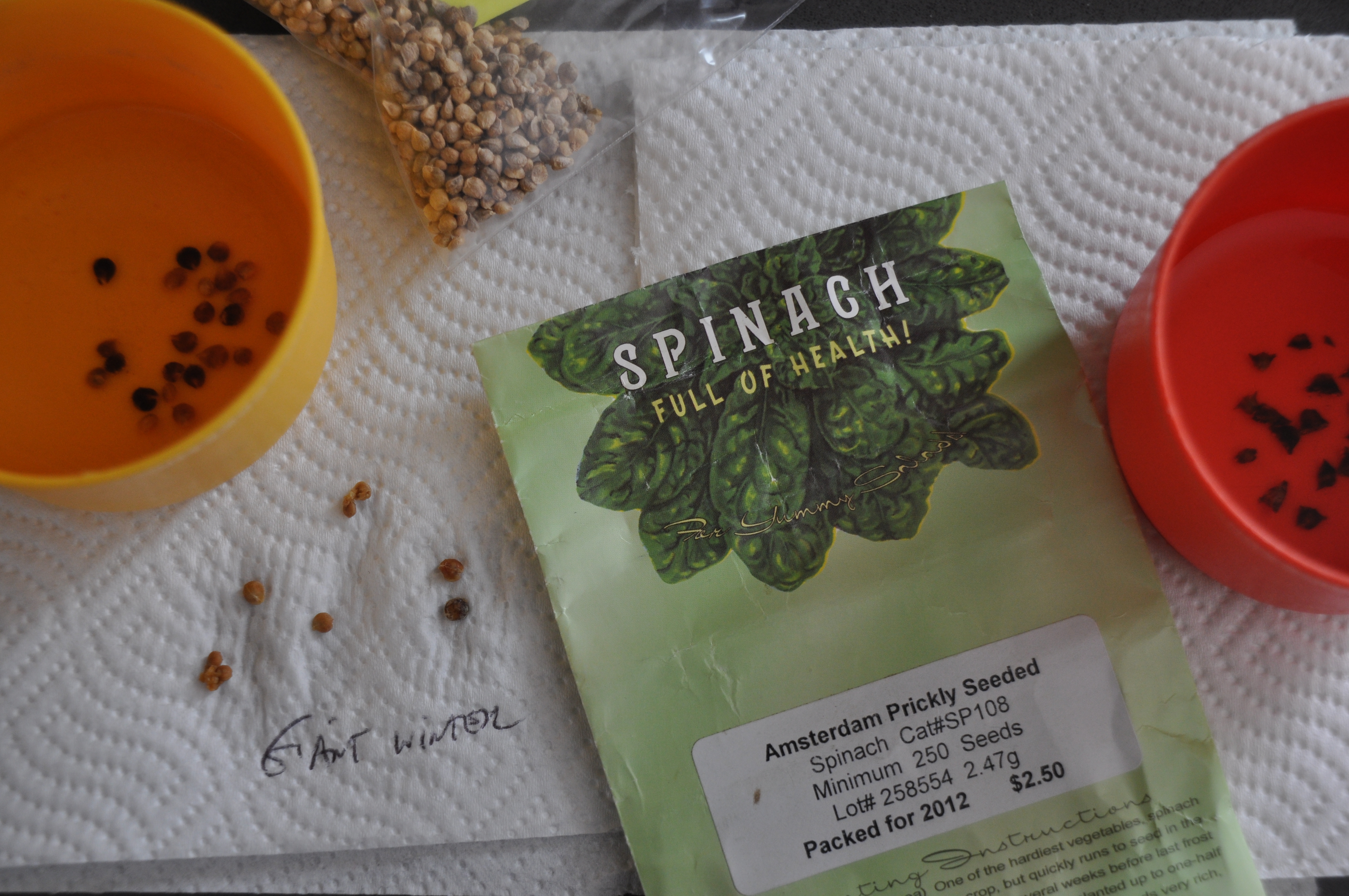
The past 48 hours we’ve been priming a few spinach seeds Jodi picked up at the City Folks Farm Shop seed swap a few weeks back.  We have some nice south-facing window sills in the kitchen we’re going to try to grow them on, but if that’s not enough light, we’ll move them under the grow lights. Next week we’ll plant another round.

There are few things more magical than watching things grow up from seeds.  With the weather as cold as it’s been around here, we could all use the distraction.