Over the Fence Urban Farm

Cooperatively farming small patches of Earth in Columbus, OH


Leave a comment

In Praise & Condemnation of Sunflowers

One might say we were blessed by an incredible crop of sunflowers this season. They self-seeded throughout the farm; a result of the goldfinches’ messy eating last year. The combination of rain and heat early in the summer helped them grow at least 15 feet tall. They made hundreds of beautiful blooms and seeds for the chickens, along with this year’s wild visitors.

One might also say we were overrun by sunflowers this season. The volunteers we allowed to stay shaded out other crops, hoarded water and nutrients, and are gonna take a ton of time and muscle to recycle.

Holding these two truths at once is a gardener’s version of the cognitive dissonance many of us are all feeling these days in lots of parts of our lives. A friend posted a funny/not funny stream of consciousness from a parent juggling the mundane tasks of keeping the home fires burning while absorbing the barrage of previously unfathomable news coming out of Washington. I am heartbroken over the famine in Gaza and the plight of the hostages still held there by Hamas (alive and dead). I could go on, but you came here to read about flowers, not politics.

The lesson I want to record is one about making choices.

In the spring when everything is emerging it’s exciting to find volunteers popping up. Plants born of their own design tend to be hardier than those grown from seeds. Their will to live is unstoppable. It’s hard not to see them as gifts from Mother Nature. And yet, if you have other plans for the space, you have to make some sacrifices. Literally.

Some gardeners find this really hard to do. We ask: How can I, someone who dedicates so much time and energy to helping things grow commit planticide?! How can I take the life of an innocent seedling who just happened to pop up in what I consider the “wrong” place?

I transplant volunteers when I can, and have even rescued some from off-site locations. But in the end, our space is limited. We have to make choices. This season, I made some bad choices with regard to the sunflowers. They cost us a lot of productivity, but they taught me a valuable lesson I will carry into next year.

We’re fortunate to have space beyond the farm to grow flowers and let things get a bit wild. The space we’ve dedicated to this agricultural project, however, needs to be a bit more controlled in order to operate at its best. That’s what agriculture is after all, human-assisted growing. In hindsight, and if I’m being honest, I’ve had issues with other companion planting experiments as well. It’s another beautiful concept (like letting chickens forage freely to help control pests or allowing wildlife to graze rather than fighting with nature) that just doesn’t seem to be playing out for me in practice. It’s just hard to get the combination right – both for the sake of the plants themselves, and for ease of care and harvest.

So, next year, we’ll be more aggressive in culling guests from the beds. And we’ll be back to report the results.

With thanks to Katey and Nancy (my ongoing farming companions) Celia Kahle from Firefly Garden Design, and Todd Schriver of Rock Dove Farm for talking these ideas through with me.


Leave a comment

Life Lessons from a Jar of Jam

I can’t remember when I first tasted black currant jam. I know I was on a very fixed income; perhaps after college while living in NYC where my rent consumed 60% of my salary and I regularly roamed the aisle of Balducci’s on the way home from work “eating with my eyeballs” before returning home for another bowl of couscous and beans. I do remember vividly the small slender bottle of St. Dalfour Conserves (from France!) felt like one of the few luxury items I could afford. I savored the rich color and taste.

Today, black currant jam retails for about three times the cost of other fruit spreads. The average consumer might balk at that price difference and grab a jar of Welch’s. They would be missing the magic. Just like maple syrup, a whole lot of berries – and time and effort – go into every bite. If you are lucky enough to have a friend grow their own and offer you some, know that person REALLY loves you. (NOTE: Everything I’m writing here goes the same for gooseberry jam; maybe more-so since those plants have the nastiest thorns I’ve ever encountered in growing food. But I moved my gooseberry bushes this year and they’re rebelling with no harvest otherwise I’d probably be dedicating this space to their bounty.)

I’ve been growing black currants for a few years now. I’ve lost count of how many. And I haven’t really done my homework to do it well. This is a common challenge (and joy!) of urban farming, and consistent with my life in general; I like too many things, try too many things, never specializing and becoming expert in anything. At any rate, I learned a bunch of new tips in writing this that I’ll be trying in the next year’s cycle and perhaps at this time next year I’ll be enjoying even more of these distinctive fruits. Who knows, you, dear reader, might even get on the list for a gift if you leave a comment below.

The black currant bush, and its berries, has a pungent smell. I’m sure it puts many people off. But for those with adventurous palettes and olfactory systems, it’s rich and inviting. I haven’t tried the berries raw, and wouldn’t recommend it for anyone who isn’t already drawn in by the smell, but for folks who like sweets without too much sweetness, do yourself a favor and find a jar of black currant jam.


Leave a comment

Cultivating Resilience is Our Resistance

Image of a blue eye in the middle of a green and grown labyrinth drawn by the author with markers on paper.

Protesters across the United States are regularly showing up to demonstrate opposition to the president and congressional leaders who refuse to challenge his executive overreach. I’ve stood alongside them and make regular calls to our representatives. (If you’ve never done this, please try it! It can be really cathartic. The 5 Calls app makes it super easy.) But my biggest form of resistance to the current attempts to move our country backwards was resigning from my job last month. I’m still processing this decision; digesting a rich stew of conflicting emotions including regret, grief, fear, renewal, solace, and excitement.

Before I started working in state government a year ago, my off-farm work was fully remote, mostly asynchronous, contract work. It was the ideal match for the busy life I enjoyed beyond my profession. The position with the state was hybrid – 3 days in, 2 days at home. I enjoyed the professional discourse and teamwork. I enjoyed working in support of arts education for learners of all ages across the state. I enjoyed spending time downtown and the views from the 33rd floor. I enjoyed the regular paychecks.

But I did NOT enjoy the morning rush out of the house on office days. I won’t miss 7-9 hours a day in a cubicle under fluorescent lights, mostly spent staring at screens. And I certainly won’t miss the commute and parking lot fees, which at the time I left had escalated dramatically as garage owners took advantage of higher demand following the Governor’s return to office order, the move that prompted my resignation.

In the end, I didn’t leave because I couldn’t have remade myself into someone who worked in an office five days a week. I left because I didn’t want to do that. Over the past 12 years I’ve built my life around our urban farmstead. Being away from here three days a week and keeping things going last season was barely sustainable. I was afraid five days away would have meant the end of this lifestyle – one that keeps me physically active, mentally balanced, and social engaged – and I wasn’t willing to give that up. It’s my recipe for resilience. It’s my path to a thriving life paved with healthy food and fellowship.

While I didn’t make this decision lightly, and while it will require some financial sacrifice for me and my family, I recognize that I was privileged to make this choice. I’m married to someone who doesn’t mind putting in long work weeks and supplying our family with health insurance and money to make mortgage payments.

I know my small act of protest didn’t make any waves. In the end I probably only hurt myself in acting out this way. But I’m proud to have taken a stand for things I value in life beyond money. I’m happy to set an example for my kids that a good life isn’t just built on professional advancement. And feel grateful to have passion projects to lean into as I live into my next chapter.

Stay tuned…


Leave a comment

Back to the Future, Farmers of America

Like nearly half of Americans who voted in the election earlier this month, I’m disappointed with the results. I’m disturbed that so many people were willing to vote for a sore loser who values TV ratings over hard work and experience. I’m sorry Kamala Harris couldn’t convince more people to follow her down a path paved in freedom, mutual aid, and joy. I’m frustrated by all the people who didn’t vote one way or another. Much of what I hear on the news makes me angry, confused, and disheartened. Thank g!d for the farm.

Research shows that having your hands in the soil and spending time with other people can help ward off depression and loneliness. Farming gets your body moving which is the first step towards better mental health. Bonus that you are getting exercise outdoors in the fresh air absorbing Vitamin D. When you grow your own food you eat better. When you eat better you feel better. And the kind of urban cooperative farming we engage in provides opportunities for social connection.

The climate is changing and the earth is literally on fire in many places, but when we come together to work with the land, we do our part to help keep her alive. Our efforts on the quarter acre we’re stewarding may not have a huge impact on its own, but imagine the impact of 1 hundred, 1 thousand, or 1 million people engaging in small scale collective farming and rewilding native habitats. Doug Tallamy is mapping the latter through Homegrown National Park. It’s beyond time we had something like that for urban farming.

If you’re angry about the election, I strongly advise you to follow the advice of Lukas Nelson & Family: “Turn off the news and build a garden.” I promise it will help you “feel a bit less hardened…a bit more free.”

There are tons of resources on this and other blogs that can help you. And I, like most every other grower I know, am happy to answer any questions sent my way. Talk to people, find your allies, check some books out from the library, start a garden journal, and start getting ready for next season. I can’t tell you it will stop He Who Shall Not Be Named* from doing dumb shit, messing stuff up, and enabling others to do the same or worse. Potentially a lot of stuff. But I’m sure it will make you, and any friends you bring along, feel better, and stronger, and ready to fight the bastards when the time is right.

This all aligns really nicely with something my friend Cheryl has been teaching in our Jewish community the past few weeks. Our tradition offers three suggestions for hard times:
1) Don’t mourn alone.
2) Express gratitude.
3) Practice tikkun olam (find, uplift, and bring light into the world through acts of loving kindness and repair).

Reflecting on how our farm has provided and will continue to provide space for all these things makes me feel some hope in the darkness. And I hope by reading this you might feel inspired to find or make space like this in your community. If you’re around Columbus, plan to join us sometime in the spring. Over winter, consider taking a class at the Columbus Garden School. Check books out from the library (see some of my early recommendations here.) It’s always the right time to start building a garden.


*I thought it would be interesting to look back and see what I’d written before about working through the 2016 election by farming. I search for his name and only found it in one post. I’m proud I kept him out of this space. He’s one of the few people whom I would never invite over for a salad.


Leave a comment

Reconnecting to Farming as Creative Practice

As some readers know, I spent this winter on the job market. As an art educator, I was often asked to talk about my personal artwork. While some of the best art educators I know do maintain active studio practices, I also know many for whom teaching is their primary artform*. So the expectation behind the question drives me a little crazy. By this logic all science teachers should have labs in their basements and all English teachers should be writing novels.

It’s also a tough question for me because for the past 11 years the farm has been my studio. That’s not an idea that makes sense to most folks so it requires some explanation. It aligns closely with my interest in contemporary art practices that utilize non-traditional materials outside gallery spaces and forefront social engagement, which are also foreign concepts to most people. I’ve written about farming this way before but after an intense and highly rewarding early spring waking the farm up for the season and securing a job at the Ohio Arts Council, I feel compelled to revisit the idea.

Years ago, Rachel Tayse (Harmonious Homestead, Hounds in the Kitchen) – one of my early inspirations in backyard farming – honored me with inclusion in an article she wrote for Edible Columbus about farming as creative practice. Rereading that article now, renewed my commitment to the concept.

While I’m totally freaked out about how warm this past winter was, it was such a pleasure to get outside and have my hands in the soil in February. Since pausing our annual Pollinator Lover’s Plant Sale, I’ve reallocated the energy and resources I used to spend preparing for that event on rejuvenating our property and donating plants to my daughter’s school as part of a honeysuckle clearing and re-wilding effort. I can’t really describe the joy I find in dividing perennials to spread beauty and bounty around. But I want to try to articulate and share how this work relates back to my understanding of the farm as a site for creative practice, as creative placemaking, using some of Hetland, etal’s (2007) Studio Habits of Mind.

It all starts with making observations. Heightened awareness and acuity is a powerful form of mindfulness essential to all forms of visual art making. (NOTE: I’m a visual artist so I focus here on sight, but I’m sure the same is true for musicians with sound, dancers with movement, and actors with behavior.) Not a day goes by that I’m not out walking around the yard looking at what’s popping up out of the soil, how the landscape changes from season-to-season. It brings joy to my life to connect in this way. To see the natural world unfolding. It may sound obvious but the more I look, the more I see.

My best days are those when I head out back and get lost. If you’re familiar with our place you know that’s not because we sit on acres of land. But within the small plot we’re stewarding, there is so much going on, and so much to do. Once I reach a state of flow, I move between plants and spaces like a painter across a canvas – digging here, weeding there, seeding here, harvesting there. Like the abstract expressionists who inspired some of my first successful (read: interesting) independent artwork, I use an all-over approach to farming. In this way my craft develops in response to what I find in the field, in collaboration with the rain, sun, soil, time, and temperature.

Moving through the tasks that ,while important to successful production, don’t feed me creatively, provide opportunities for me to practice engaging and persisting. While people generally refer to K-12 art class as “fun,” honing an artistic craft requires repetition and trial and error that is not entirely enjoyable.

Everything I’ve written thus far pertains to my relationship with the work. But this season I’m trying to get people back to the farm after my sabbatical because I know that it’s your presence that completes the work. Having people over is the final component of farming as creative practice. It’s like a tree falling in the forest – a farm that no one visits is important, it serves its primary function of producing food but to serve the transformational function of getting people to think differently about where food comes from and how edible plants can function in a landscape, they need to stand within and see it with their own eyes. Like Walter Benjamin wrote about works of art in the age of mechanical production, an urban permaculture farm in the age of industrialized agriculture has an aura about it that can only be experienced in person.

So keep your eyes and ears open for announcements about our next open house! Coming this June.

*See: Eliot Eisner’s “The Art & Craft of Teaching” in Education Leadership (1983).


2 Comments

July 2023 Catch-Up

It’s been seven weeks since my last post. A post in which I promised myself I would try to post more regularly to help me keep track of what’s happening on the farm and in my mind about what’s coming next out there. That hasn’t happened. So, today I’m going to record seven vignettes, one for each week I missed; reflections on what’s happened in that time. I’m feeling kind of stuck so hoping this might help move me along a bit.

1. June 9: 9:13AM

I had to go back to the weather history to remember just how fucking awful this was, and continues to be. In mid-May there was so much amazing flower set on all the perennial berries. I took a series of photos but I guess I deleted them. Trust me. The raspberries, gooseberries, currants, and blueberries were all exploding with flowers. And then it stopped raining. For weeks.

Check out the middle row below. Bear in mind, to keep plants healthy and thriving, they need an average of one inch of water EVERY week. This isn’t a cumulative thing. Imagine you were doing hard work outside for a month. You’re out shoveling, hoeing, weeding… How would you feel if you got only one, albeit tall, drink of water that month.

Things weren’t much better into early June.

Yeah. So, by the middle of June, all the berry bushes started to look like the blueberries above. Full of fruit that was desiccating before my eyes. I’m not in the habit of watering perennial bushes. That’s the beauty of them. You set them and (basically aside from pruning and harvesting) forget them. Reluctantly I brought over the hoses. I was upset and feeling hopeless as one plan I had for the future of the farm was converting more beds to perennial berries that wouldn’t demand much time and effort.


2. Jun 17 – 2:14 PM

In mid-June, The Spurgeon General and I took the young one to Colorado for a week. We did a lot of hiking in the mountains. We played disc golf on courses nothing like what you see in Ohio. And we spent a day in Boulder where we stumbled on an exhibition at the contemporary art museum – agriCULTRE, a collaboration between artists and farmers. All of a sudden, the distance between my day job as an art educator and my hobby farm work seemed a little smaller. You can find information about the show here (after you finish reading this post!). Below are a couple of my favorite moments.

Anthony Garcia Sr. with Laura Allard-Antelmi & Richard Pecocaro – “Masa Seed Foundation harvests, distributes, and archives bio-regional, climate-adapted, open-pollinated heirloom seeds, each with a unique history…This seed shelf, a small cross-section of Masa’s massive library, educates us on how plant kinship exits throughout the world.”

Esther Hz with Erin Dreistadt & Jason Griffith – “Interdisciplinary artist and former urban farmer Esther Hz revisited her research in biodynamic farming through her collaboration with Aspen Moon Farm.” She furthers Steiner’s ideas by exploring through play with image and text – “replacing ‘soul’ with ‘soil’. in famous quotes. To compound this idea, she constructed two zoetropes (a pre-film animation device) to emulate the ‘wheel of life…” (quotations here and above from text by Guest Lead Curator, Jaime Kopke)


3. June 21 – 3:35PM

Somehow they made it through. When we got back from Colorado, the berries were booming. Friends who were farm-sitting got most of the red raspberries, and I was happy to share. I never grew berries for the CSA. They were always a selfish endeavor. A few times, towards the end, folks got some raspberries, ironically from those red ones that came under the fence from the neighbor’s yard or elderberries from an abundant bush that succumbed to fusarium wilt this year. But there wasn’t really enough of the rest to share broadly.

This mid- to late-June was all about the berries. As I watched the tomatoes and marveled again about just how long it takes them to set fruit and ripen, I spent many hours carefully plucking currants (red and black), raspberries (mostly black), and gooseberries along with a few blueberries and last gasp strawberries. The gooseberries and black raspberries require long pants and sleeves to protect against thorns. It’s hot and ouchy work. But when you’re inhaling bowl of mixed berries topped with whipped cream, that all fades away. I made black raspberry jam from a bag I froze last season (yikes!) and froze tons more to eat throughout the year.


4. July 2 – 2:49PM

One day I noticed something strange looking on the poppy heads I was drying in situ to use in bouquets. Upon closer examination, I noticed something had accessed the seed chambers. A little information on the architecture of a poppy this will help it make more sense. Basically, after the flower falls, which happens maddeningly quick with poppies, the head starts to bulge. As the seeds take shape and start to dry out, the head forms vertical cavities around the center point. Something was working its way down these, one by one, gobbling up all the seeds. Who was it? Was it poisoning them? I had never seen this before.

For a few days after my discovery I noticed the poppies swaying when I’d approach the farm gate, as if something had just flown away. I was dying to catch the little opium fiends in the act! One day it finally happened. A gold finch landed in the poppy bed and had its fill. Mystery solved and thanks to Google, I now know they peel the pod open and the seeds help aid their nutrition and digestion!

Overall, the garden was a jungle at this point. The spring cool flowers were giving way to hardier summer blooms and native volunteers that joined the party. There was (and still is) Spiderwort everywhere! The paths between beds were growing over with red clover and wild sorrel. I enjoyed and was complimented on how lush things looked but I was feeling claustrophobic and annoyed with myself for letting things go all Big Anthony’s garden again. (See Strega Nona’s Harvest – an all-time favorite picturebook about gardening.)The upside, lots of gorgeous flowers to share with family and friends.


5. July 9 – 5:59PM

For the first time in ages, we have summer squash in abundance! This is largely due to diligent squash bug and egg picking work aided by our friend Katey. I’m not holding my breath that it will last, but we’ve been trying tons of new recipes while it does! A few favorites – Zucchini, Quinoa, Mint, and Pistachio salad; Zuchinni Chocolate Layer Cake; and Zucchini Szabi.


6. July 12 – 6:29 PM

The first and only peach we’ve gotten to eat from our tree. This spring, for the first in memory it was loaded with fruits. Then the June drop followed by the drought left the ground littered with immature fruits the chickens and raccoons took great pleasure in making disappear. Completely.

While I’m on the subject of raccoons… They are the worst! After a few mornings finding the work table and storage tossed like a cat burglar had come around, I set up the trail cam. Sure enough, it was a raccoon. I cleaned up as best I could including some seeds and things that were out and no doubt tempting. This helped. With the supplies. But then they moved on to a few dozen newly planted basil seedlings which they dug up and left for dead. #thisiswhatthefuckersdo


7. July 20: 7:28PM

The tomatoes are finally coming in. Sun Gold, Berkeley Tie Dye, San Marzano, Purple Cherokee, and a few more I can’t remember. Feels later and later every year but I’m happy to finally be binging on their fruit. Last year we had a lot of issues with the tomatoes and have been back to diligently watering and fertilizing. The plants, overall, look much happier and healthier. But stay tuned. I just found mosaic virus (above) which looks an awful lot like a tie dye to me…


2 Comments

June 2023 – Catch Up Brain Dump

Well, it’s been six months since I wrote in this space.

I can’t remember how many times I’ve sat down and typed an opening line like this. Usually I delete them. It’s boring. Who wants to hear a writer lament about their inability to make time to write? Just write something already. But sometimes marking that time has passed you by is important.

Not because I feel guilty for not writing. Not because I think I owe anyone an apology. But because I’m sorry I haven’t been making time for it. Not because I think you, dear readers, are having trouble sleeping as you await my next offering. But because keeping this blog has been good for me.

It has given me space to document and reflect on starting and maintaining OTFUF for the past ten years.

It’s given me a place to store memories. To track the seasons. To track tasks. A space to return to when memory fails and I can’t remember what I did or how well (or poorly) something grew last season.

This blog has given me a platform to record, to share, and dare I say, to inspire.

Releasing myself from writing, from feeling self- or social media culture-imposed pressure to post, was part of my shmitah practice last year. And as a wise friend helped me realize, when you give yourself a sabbatical, when you truly take a break, you can’t expect to hit the ground running the next year. This aligns well with contemporary Jewish thought leaders advocating consideration of a shmita cycle, of a focus for each year in the seven year cycle. Something like: Dreaming and scheming, iteration, reflection, recalibration, reiteration, reflection, rest, repeat.

One thing I really let go of last year was the need to make plans. I spent time on the farm as time and energy allowed. I watched what came up from the soil on its own as much as, if not more than, I willed things to come up. And so I entered this season unsure what I was doing.

I did spend some of my leave reflecting on what I did not want to do anymore; what I was grateful to have a break from as well. as what I missed. Figuring out what comes next is slowly coming in to focus. Bit by bit.

The first decision I made was to suspend our CSA program indefinitely.

Starting the farm on a community supported agriculture model allowed OTFUF to get up and running without having to spend much of our own money for infrastructure or supplies. It would take me a minute to count how many truckloads of compost, water bills, seeds, gloves, and bags of chicken feed we’ve bought over the past 9 years. It’s been a lot, and nearly all of it was covered with funds from the CSA.

The first few years those who joined not only trusted us with their financial contributions, they gave us their time. In many ways that was more important, and more valuable, than cash. We built this place with all of you. And we grew an incredible amount of food those first few years because we did it together.

Over time, however, our original members started their own gardens and stopped coming around as often. New members didn’t have the same interest or commitment to the collective or the work. This impacted both my enthusiasm for filling CSA orders – I was always in it for the transformational potential, not the transactions – and my ability to do so. Working with fewer helping hands, the farm wasn’t as productive as it once was.

So no more CSA. At least for now. If I hear from some substantial number of people reading this far that you’d be excited to be part of something like that again, I’ll reconsider. I’ll rededicate myself to scheduling work sessions, making chore lists, and assigning tasks. For now, I’m enjoying the freedom to just watch the flowers grow and I’m thinking about investing more in perennial crops like berries that provide year-round pleasure.

The increasing unpredictability of the weather also contributed to my frustrations around the CSA. Heat at the wrong time. Never enough rain when we need it and too much when we don’t. The drought we’re experiencing now makes me grateful not to be beholden to anyone. At the same time as it makes me wish I had money in the bank to pay the water bills when they come due.

All this has me wondering whether the farm is still a farm.

Along with suspending the CSA and absolving myself of the pressure to post regularly to social media channels, I entered this season with no established plan or efforts to bring visitors to the farm. Given that, would it be better to think of myself again as a gardener, or homesteader? Is that all I want? For myself? For the space?

Rereading what I wrote in 2016 when I first embraced the title Urban Farmer, I guess most of it still fits. I’m growing more food than the average home gardener and our yard looks even less like our neighbors’ now than it did back then. But I’m not feeding others like I was back then. And I haven’t been invited to share the farm on any tours or actively recruited scouts and school groups to come visit. Then again, while it feels and looks like August, given the lack of rain over the past month and recent heat wave, the season’s just getting started.

Watch our social media streams for “flash farm sales” which we’ll host whenever we have an abundance. Sales will take place on site so folx who come by can see where the produce they purchase is being grown.

I’m also in conversation with Dr. Neraj Tayal about an Edible and Sustainable Backyards Hop here in Beechwold. If you or someone you know has a space that would make a good addition, please reach out!

Visiting Neraj’s space last season and hearing how much our work inspired his own is something I’ve been thinking about a lot. It demonstrates the power of having places like OTFUF in the community and the importance of inviting people in to see it. Over the Fence has always operated in a liminal space between community farm and private garden. We aren’t inherently public facing – not visible from the street or occupying a public space. People are always welcome, but you do need to request or have an invitation to visit.

I’m also continuing my work with the Ohio Ecological Food and Farm Association (OEFFA) on the Agriculture Resiliency Act. This marker bill for the 2023 Farm Bill draws attention to issues and efforts that can help make agriculture more sustainable, for people and the planet. This includes the promotion of soil health, increased investments in local regional food systems, addressing consolidation that is driving up prices and contributing to waste, and funding investments to support organic research and beginning and BIPOC farmers. You can learn more about OEFFA’s 2023 Farm Bill platform, hear from proud organic Ohio growers, and take action here.

So, I’ll try to get back to posting here a bit more regularly; to reflect and to share. I’m open to hearing what kind of content you’re most interested in – Reports from the Field, Tips You Can Use, Farmer Field Trips, Farming Advocacy… And I also reserve the right to post, or not post, whatever inspires me.

XO, Thanks for reading this far.
Jodi


Leave a comment

Farmer Field Trip: A Garden of Hope

This is the first of a series of posts I’ll be sharing this season highlighting growers in central Ohio. If I’m lucky, I’ll venture beyond the borders of the Buckeye state once or twice before the fall frost comes back around. I’m looking forward to taking the season off from our CSA in order to learn about what others are doing and contemplate new directions for our operation in the years to come. Hope you’ll join me on these adventures. – Jodi
This time of year, I spend a lot of time in the basement taking care of seedlings. It’s quiet, methodical work – sowing, watering, monitoring, thinning, transplanting – that seems perfectly suited for wintertime. But as soon as the sun starts shinning, and especially after the clocks spring forward and the temperature warms a little, I’m ready to get out.

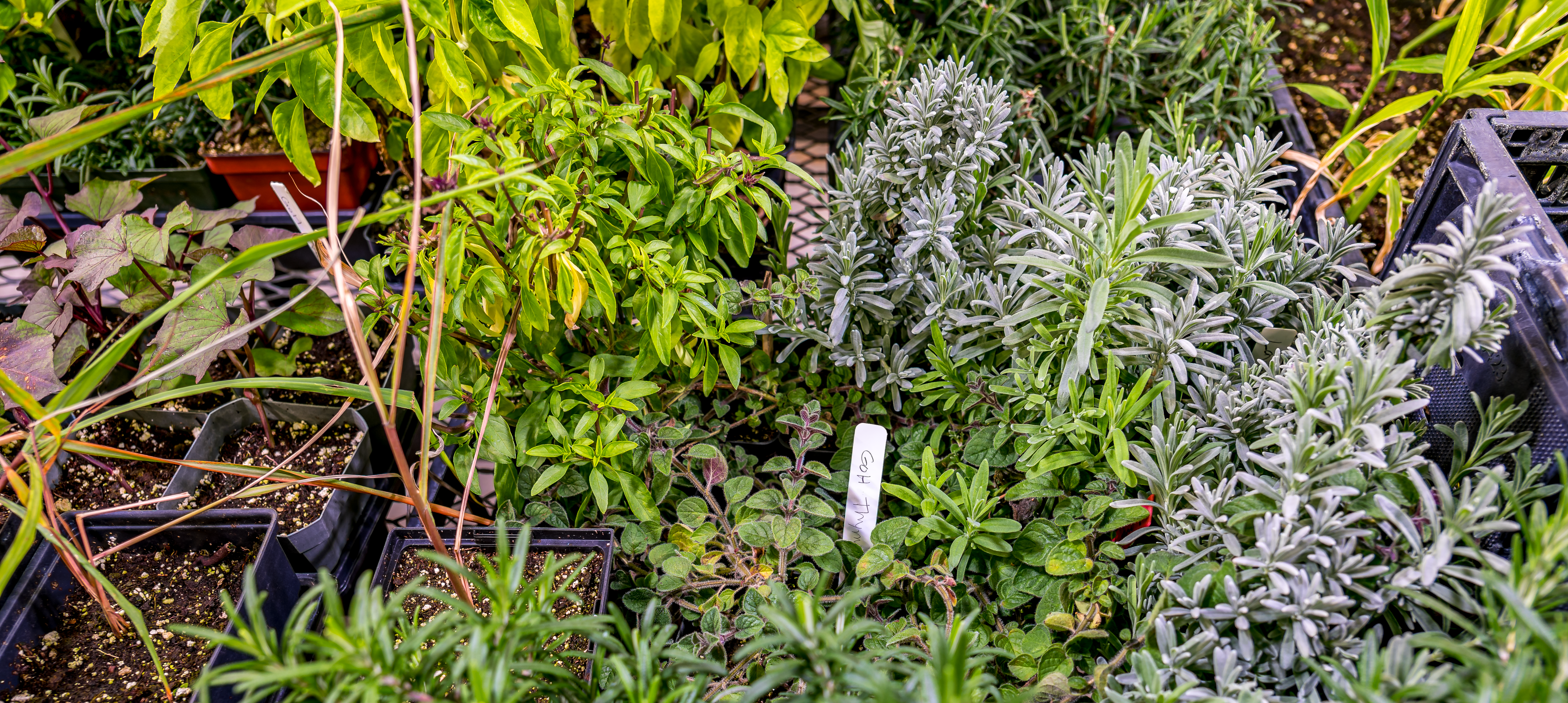
As I’m taking it easy this year in observance of shmita, I have a few visits to other Columbus growing operations planned. Recently, I got to swing by the Howlett Greenhouses at OSU (along with longtime friend and photographer of the farm Julian Halliday) to check out how Amy Barr is getting ready for the season as garden coordinator for the James Cancer Center’s Garden of Hope.

Amy showing off her seedlings including ginger, rosemary, and other woody herbs regenerated from previous harvests.

2022 will be Amy’s 5th year with the garden, promoting the concept of food as medicine. From June-October cancer patients, survivors, and caregivers are invited to spend time in and harvest from the garden as often as once a week. While there, they learn about the nutritional benefits of a plant-based diet, which studies suggest may help prevent the growth and spread or cancer. In addition to increasing patients’ familiarity, knowledge, and access to healthy foods, the program promotes time outdoors and supports the psychological benefits of social engagement, breathing fresh air, and getting soil under your fingernails.

Amy works in concert with a dietician to teach participants how to add more produce to their plates. A healthy goal, she suggested, is to fill half the plate with vegetables and plant-based proteins. While they emphasize produce, they do not push a vegan or vegetarian diet. By visiting the garden, she reports, people are more likely to try new things. Staff and dietetics students from the university provide easy recipes to get people inspired by what they bring home.

In the same way the garden inspires participants, it has been inspired by them. Over the years, staff has expanded what they grow to meet the cultural demands of those they serve. After it was requested on patient surveys, Okra, was added to the garden offerings. Bonus: It has a beautiful flower. Patients have also taught Amy and her colleagues new ways to use familiar plants – like sweet potato leaves.

Like the rest of us, Amy and her team had to pivot their operations during the pandemic. Rather than a volunteer system, they ran the garden more like a tradition CSA – participants drove up to the garden and received a weekly share. While this was limiting in many regards, they learned that people were more likely to try new things when given them in a pre-made bag than when they were picking for themselves. This year they plan to try offering a “featured item” that everyone receives alongside those they gather for themselves.

If you or someone you know have or are living with a cancer diagnosis and are interested in learning more about The Garden of Hope, sign-up for their orientation April 30th, click here. You don’t have to be a patient at The James to participate and your caregiver (up to two, who need to register individually) can come along.

I can’t wait to visit the garden again this summer when it’s in full bloom. (Though it did look beautiful in it’s winter slumber….)

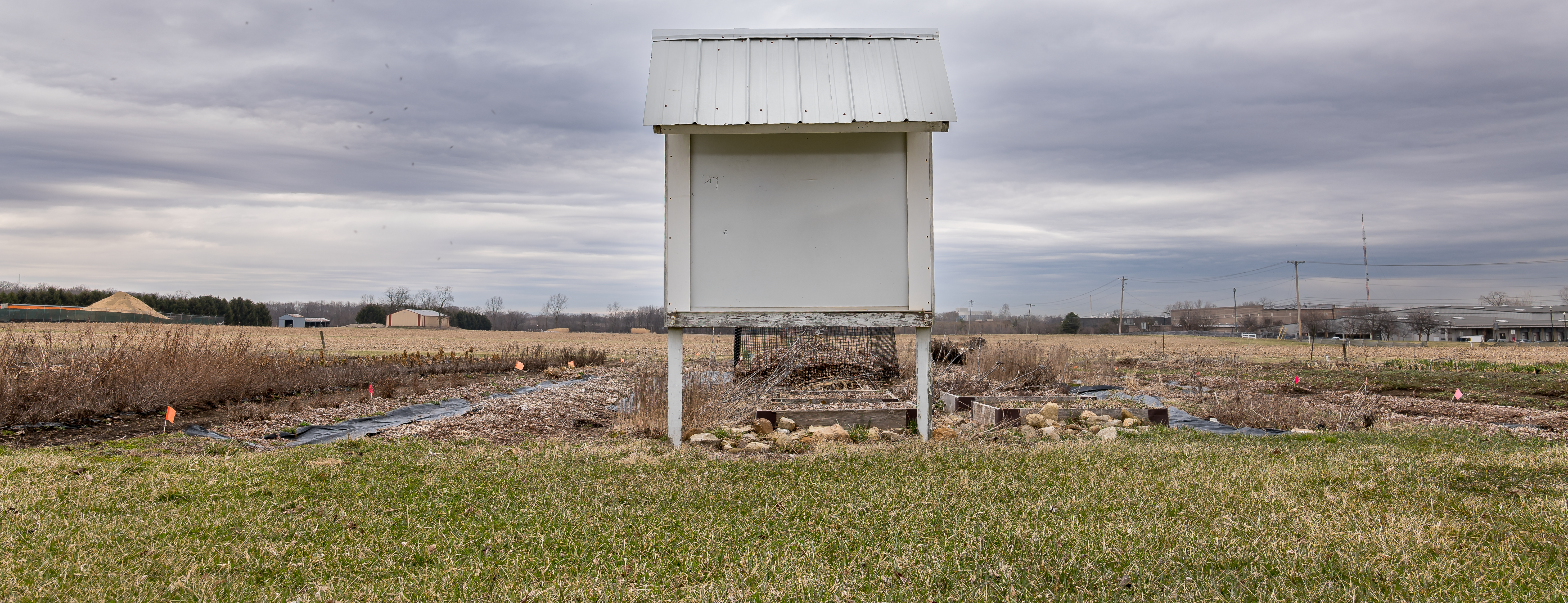
The Garden of Hope on The Ohio State University’s Waterman Agricultural and Natural Resources Complex @ Kenny Road.


Leave a comment

Preserving Lessons from Our Semi-Wild Season

Fall on the farm is the time for preservation: collecting and saving seeds in the field, canning produce in the kitchen. This growing season has been like no other in our farm’s short history. We went from planning a sabbatical to planting a victory garden. We limited visitors on site while attempting to stay connected and relevant. We weathered another hot and dry summer as we tried a few new strategies for planting, tending, and letting things grow wild.

I’m sorry I didn’t share more. Not because I think I let readers down, but because this blog is my memory. For the last seven years it has served as a preservation space for my experiences and day-to-day, week-to-week, month-to-month, and year-to-year observations. And I’m so glad I did the work to build that archive. I use it all the time.

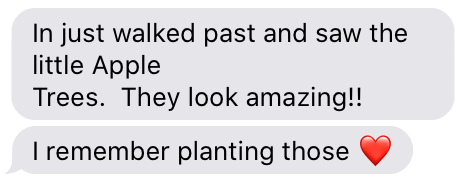
A few weeks back, for example, our neighbor Leslie sent me this text:

Using the blog’s search function, I found a post from April 12, 2014 featuring a slide show of one of our first full work days on the farm. Included was this photo of Leslie and her son along with other neighbors and friends helping us plant four apple trees out front:

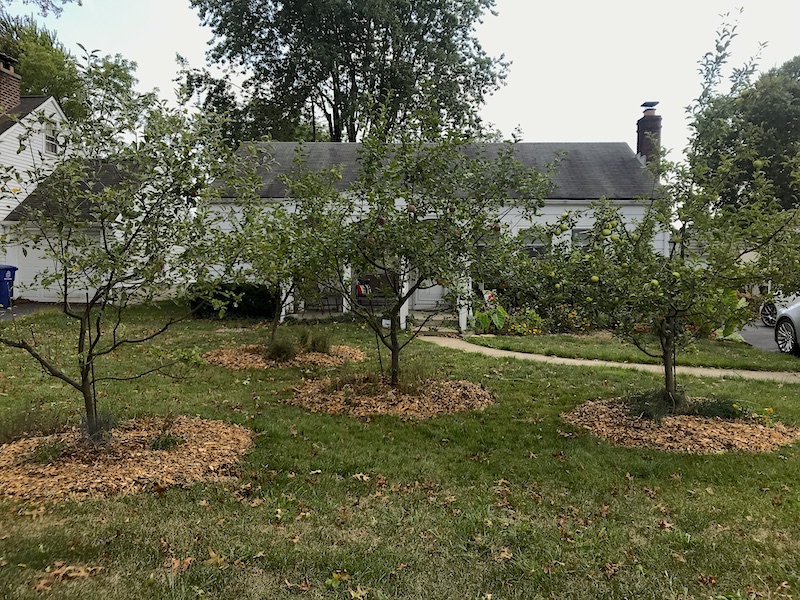
Here’s what our neighbor saw when she walked by last month:

Seeing these photos together is a gift. It’s amazing to see the change in the land that we created. Two of the four trees are loaded with fruit and the other two are offering us more than they ever have before. I’ve been excited to see this abundance appear this year as it aligns with the concept of shmita (sabbatical) as I intended to practice it. According to this ancient Jewish tradition, farmers are required to take every seventh season off to rest the land and themselves. We are allowed to eat wild and perennial crops and some Jewish farmers have suggested that it takes about seven years for such plants to get established. Our trees seem to prove that theory which has me excited about planning for year 14. Maybe by then I’ll be able to convince my mother-in-law, who lives in the farmhouse, to let me convert the rest of the front yard to edibles. (I know the resident deer herd would appreciate it!)

Which takes us to my first lesson from the wild season I want to preserve – living in harmony with our urban wildlife. This season we really embraced those living in our midst, even in the moments when they were destructive – to our bodies and our plants.

In the course of a few weeks, I shot this video of our passion fruit plants which have hosted an enormous collection of big fat beautiful bumble bees this year and then stuck my hand in a yellow jacket nest and suffered the consequences, as did the wasps.

We also tested an idea for keeping tomato thieves at bay, which worked reasonably well. The strategy came to me by way of Kate Hodges (Foraged & Sown). When weather is dry, animals go looking for water, as they should. When puddles and other sources are unavailable, they poke holes in tomatoes and suck out the liquid, leaving you with a perfectly good looking fruit, save for the hole. It’s a frustrating site for any grower but the past two years, as our local rat population has been displaced by road and sewer construction, we’ve seen a big rise on little farm. When Kate first proposed the idea I scoffed. Leaving water out for the very creatures who were robbing from me seemed like an invitation for further trouble. But, it seemed to work! I even caught one on the trail camera enjoying the oasis.

MOULTRIE DIGITAL GAME CAMERA

(Photo note: Time stamp should read am, not pm.)

Determining to only grow seeds already in our possession–once we decided to grow anything–we realized we were living in abundance we weren’t fully aware of; enough to grow a farm full of food.

A surprisingly good producer were Roma tomatoes grown from seeds we got through a MidOhio Food Bank grant program 2 years ago. In reflection, I probably didn’t grown them because I was being a snob. They game from one of the big seed companies (Burpee or Livingston) and the picture on the packet looked pretty basic. Like the uniform plum tomatoes you find in the grocery store that are pink inside and have no flavor. Turns out, they grew an incredible amount of delicious fruit, perfect roasted for Pasta Puttenesca (now on regular rotation. Yes, we are spoiled). I wish I had weighed the output of a single one of these plants. Lesson learned. Don’t shun the hand that feeds you. (And still, I will support smaller-scale seed farmers…)

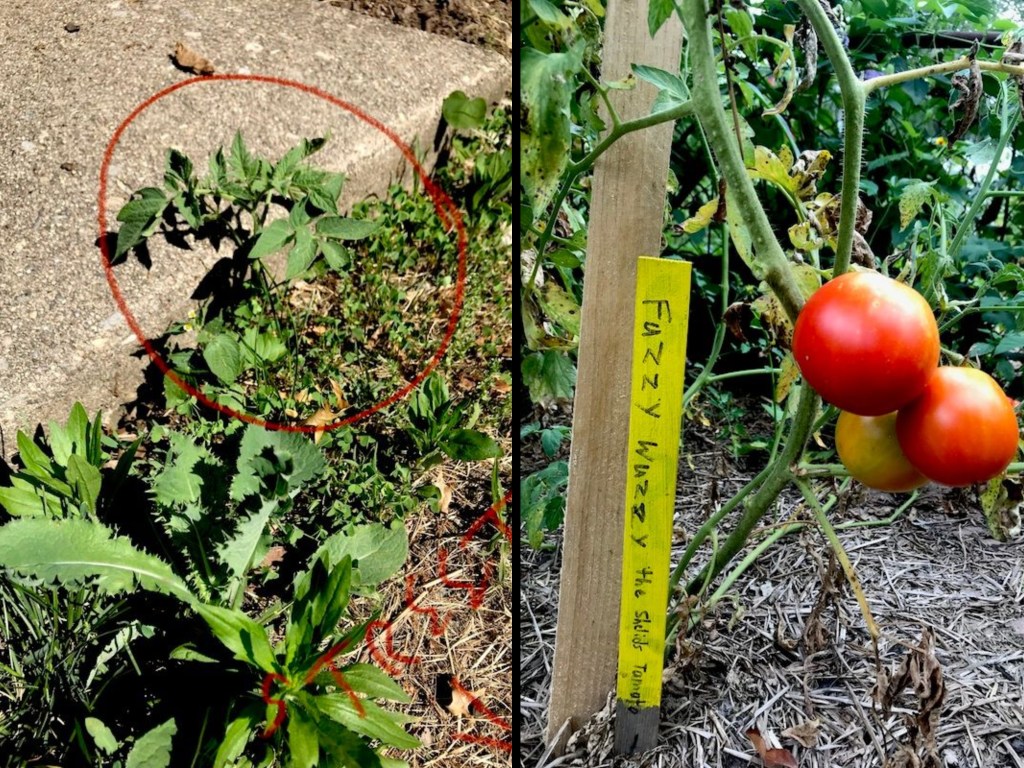
My daughter and I also found a “wild” tomato plant growing between the curb and street in our neighborhood. After visiting it over a few weeks among its neighbors–“weeds” who were bound to be pulled or poisoned–we carefully rescued, transplanted, and labeled it with the name, “Fuzzy Wuzzy.” Like any good healthy tomato seedling, its stem was covered in a billion tiny hairs (aka trichomes. Super cool. Look them up. After you finish reading this.). We enjoyed a few nice big slicers care of this adoptee.

Which leads to the final lesson I wanted to record, for memory and further contemplation, and action, I hope. I had set an intention for shmita of learning more about wild edibles. Towards this end we went for a bunch of hikes with foraging friends. On one we found morels, on another boletes but overall, the hot dry weather prohibited this activity. I did harvest a ton of chanterelles over two weeks spent in the mountains of Georgia. Which was awesome. And I learned that the purslane and poke weed in the yard is edible and highly nutritious.

All in all, it was a very good season. I shouldn’t complain. (Note, I could but I won’t).

Shanah tovah to all the Jewish Farmers out there.


Leave a comment

Hope for the Future

This is Leo.

img_4354-1

In February, he wrote me this email:

Hi my name is Leo and I’m currently a freshman at Ohio State. I happened to find the Facebook page for Over the Fence Urban Farm, and immediately knew it was something I wanted to support. I’m originally from Hawaii, where through school trips and community service opportunities I was able to go to and help out at multiple local organic farms. I would love to be able to come and help out in your garden. Please email me back with any info regarding ways I can help.

I wrote back and let him know things would get going in March and gave him a rough idea of what days of the week might be good to come around. Low and behold, the first week in March, he got back in touch! He wanted to try to come around before he left for spring break. Things didn’t work out that week, but once he was back in town and completed his midterms, he reached out again. We went back and forth for a month and a half until, yesterday, we connected, just days before he leaves for summer recess.

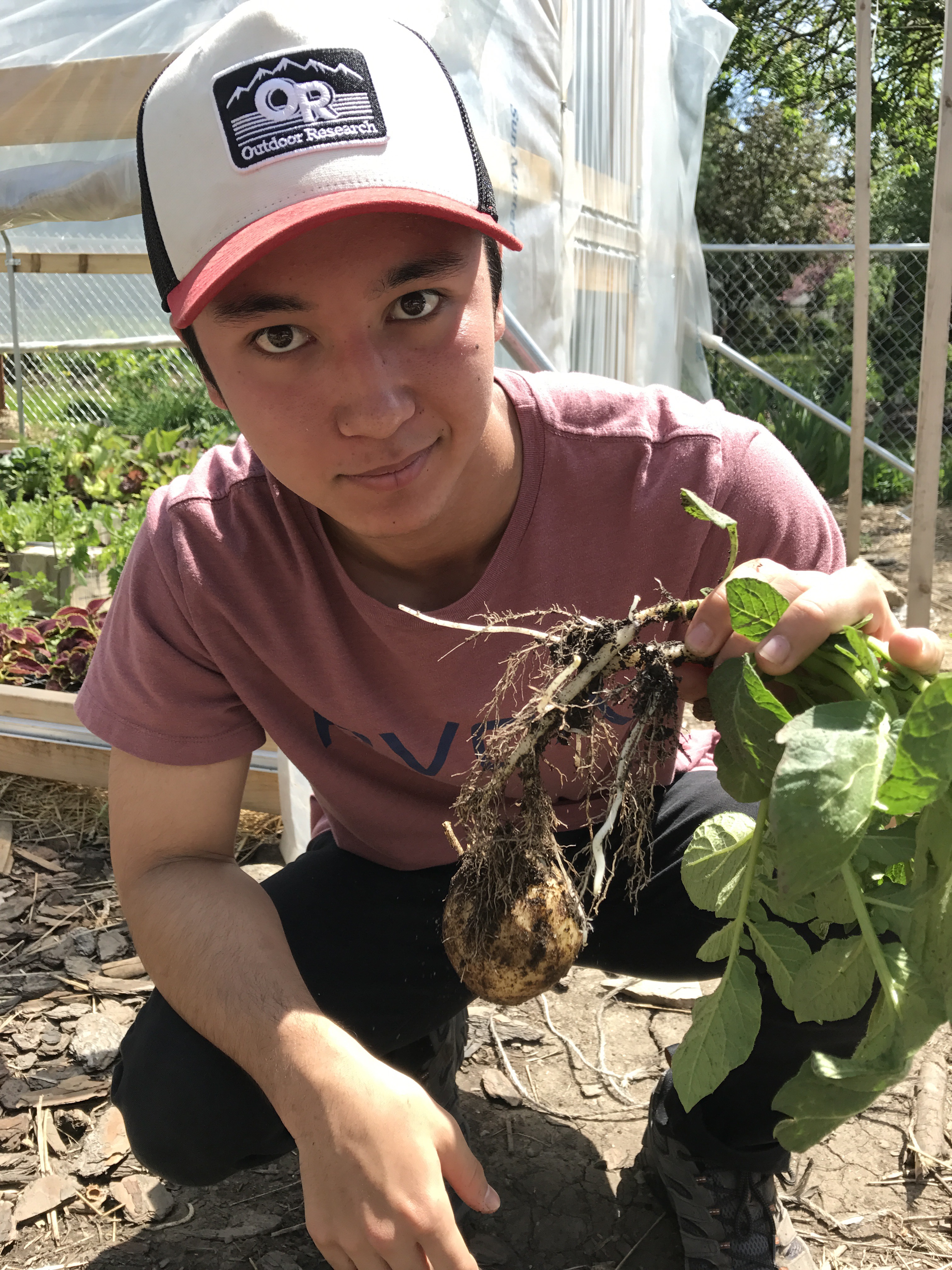
Leo showed up on time. He was enthusiastic about what we’re doing here – asked questions, shared stories from his own experiences, smiled, helped with the chores, played with the chickens, and took a big bag of greens back to the dorm to make a salad for his friends.

Thank you, Leo. Thank you for reaching out and keeping in touch. Thank you for giving me hope for the future at a time when so many things in our country and around the world seem to be upside down and falling to pieces. Thank you for being a mensch. Have a great break and we’ll see you again in August!

(If you’d  like to read more about young people working on the farm in this post from last summer, “Help from Abroad.”)