Over the Fence Urban Farm

Cooperatively farming small patches of Earth in Columbus, OH


Leave a comment

Scenes from the Field: Good Ole-Fashioned CSA Work Day!

This past Wednesday I sent out a call for a CSA workday this afternoon. At that time the forecast was for sunshine and temperatures the 60s. This morning, the high was forecast to be 51 with clouds. As folks started to arrive at 3pm, it was about 43 with wind. But they came!

When we first started the farm, and for the first year or two, our work days were well attended social affairs. People warned me the novelty might wear off and attendance might dwindle. Each year brought enough new members to keep everything growing and the dream of our little cooperative going, but the past year or two overall numbers have been down. If I’m being honest.

And so I was genuinely amazed when an intrepid group of folks (OTFUF veterans and new recruits) showed up to lend a hand planting, spreading compost, and doing some other general maintenance on the farm today. It felt like the good old days. I didn’t take my boots off and crack a beer until 7:30. Here’s to more days like this. If perhaps a bit warmer…

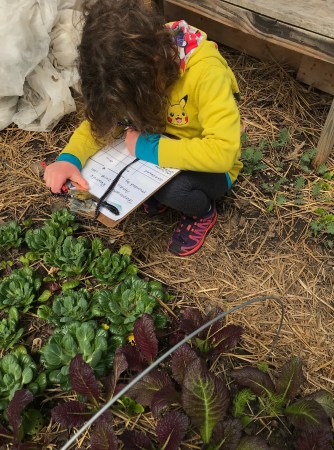
Julian supervised the potato planting efforts, and took amazing photos, of course!

IMG_1490

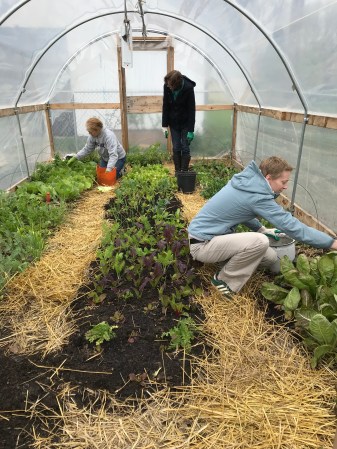
Liz, Elizabeth, and our new friend Julian (the 2nd) spread compost in the high tunnel.

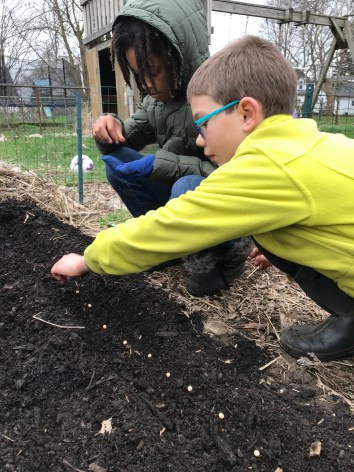
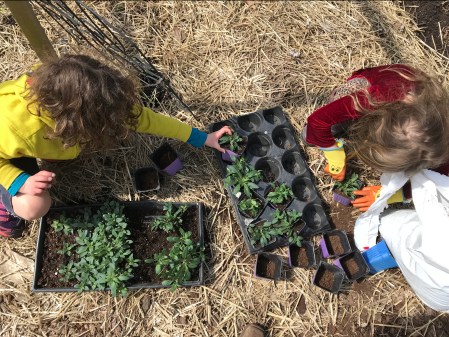
Cora and a few other kids on the block who are all members of the
Clintonville Farmers’ Market Kids’ Garden Club
planted a few surprises* to welcome their friends back next month.
The girls brought their mom, not shown, who lent much appreciated help
watering in our wake.

*Thanks to Baker Creek Heirloom Seeds who provided us with a $50 credit to their online shop in support of the work we’re doing! Thanks to your generous support, we’ll be experimenting with some new varieties of corn, squash, beans, and carrots this season.


1 Comment

Celebrating Earth Week Columbus with the Kids Garden Club

Members of the Clintonville Farmers’ Market Kids Garden Club came to the farm today to celebrate Earth Week and get the garden ready for the 2018 season.

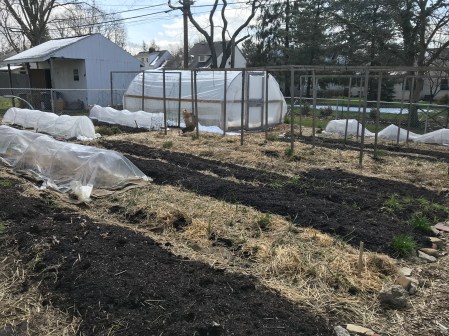
Here’s a few scenes of the garden before we got started.

One of my goals for the event was to move the fence from the edge of the raised beds to the space beyond them. This will provide the kids a lot more growing space and room to move. With the help of a few handy moms, we got that job done. Now the kids have a bigger space to grow, and the chickens have better boundaries.

IMG_1366

The kids cleared the straw blankets that were sheltering the soil over winter and spread compost all over. Then they played around with the broadfork.

We planted some seeds even though though my go-to garden calendar said it wasn’t a good day for it. We aren’t due to start regular club meetings for a few weeks. I’m hopeful that Persephone will look kindly on our efforts and the kids will have some seedlings to welcome them back.

IMG_1373

In all the excitement of getting to know new garden friends and keep activities moving throughout the evening, we forgot to water. Luckily, shortly after we said our final farewells, it rained. Fingers crossed for more good luck ahead…

Thanks to Trish Clark for suggesting we have a pre-season event as park of Earth Week, and thanks to Green Columbus for sponsoring our activity as part of Earth Week Columbus, “the largest Earth Day volunteer service opportunity in the nation, [planned] in partnership with community leaders, non-profits, and businesses.”

.


Leave a comment

Food for the Bees

28661040_1968924223368050_6376546818326528000_n

April 14th we’ve hosting our Second Annual Pollinator Lovers’ Plant Sale & Open House. In addition to making a few bucks for the farm and our friends at Red Oak Community School, we use this sale to share some of what we’ve learned about feeding the bees and butterflies that help feed us by pollinating our plants. This year we’re offering a buffet of perennials and annuals. This post offers a bit of a shopping guide for people who are coming to our sale.

First, I remember when I was first getting into gardening I didn’t know the difference between a perennial and annual. Perennials are plants that come back each spring after a winter of hibernating, annuals need to be replanted each year.

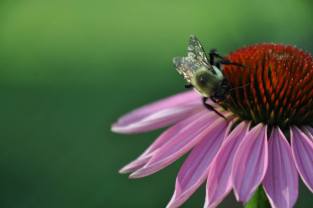
The perennials we’ll be selling – Yarrow, Sedum, Aster, Purple Cone Flower, Chives, Bee Balm, Lavender, Lupine, Camomile, Iris – are mostly drought tolerant. This means you won’t have to water them once they are established in your garden. This is good news for forgetful gardeners and those interested in conserving water.

The annuals we’re selling – Cilantro, Parsley, Calendula, Safflower, Forget-me-Not, Sun Ball, Gilia Globe – include herbs and flowers which provide food for us as well as the bees and other cutting flowers. Generally, annuals need more attention than perennials, including more food and water.

The second important thing to consider when planting for the bees is flower timing. Ideally, you want to have things blooming throughout the season to keep the bees coming to your yard. Here’s an example from spring through fall: Chives –> yarrow –> calendula –> purple coneflower –> bee balm –> sedum –> aster. Use the links above to find combinations that might work for you.

One final note, once bees find a place to feed they like to return, and bring their friends! So placing varieties of plants in groups can help you not only attract the bees, but keep them around. In other words, consider buying more than one plant of each variety you choose and spacing them close together in your garden.

See you at the sale!


Leave a comment

Scenes from the field: 4.2.18

IMG_1243

The sun was shining and The Farmers Almanac Gardening by the Moon Calendar  said it was a good day for transplanting. We were lucky to have friends free to help us move some things around. Here are a few highlights.

A peak under some of our caterpillars. Clockwise from top right – spinach under frost blanket (planted 2/5), potatoes under low plastic tunnel (planted 2/22: Thanks for the inspiration, Milan!), and the view inside our high tunnel panted with various herbs and greens in January).

Homeschool on the farm today included measuring and recording air and soil temperature in 5 different growing situations (high tunnel, low tunnel w/plastic, low tunnel with frost blanket, glass-topped cold-frame, and no cover.)

img_1255.jpg

The girls potted some plants for our upcoming sale with partial proceeds going to Red Oak Community School.

img_1260.jpg

Then the moms broke our backs transplanting hundreds of onion, kale, beet, and spinach seedlings. Like I said, it was a very good day.

IMG_1262


Leave a comment

More Stories of Life and Death on Our Little Farm

[Warning: This, like my posts about rabbits and voles, includes discussion and images of dead animals. Vegans beware.]

IMG_3284

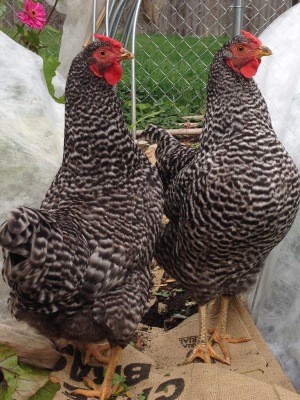
Our first flock of hens are nearing the end of their productive egg laying years. As such, we’ve been having lots of conversations around the farm about what comes next, and seeking advice and options for how to make room for a new group of ladies. In the meantime, and after a long cold winter with many days when they didn’t want to leave their sheltered run, I’ve been letting our girls roam around the yard from dusk ’til dawn.

Leaving them out on their own while I’m not in the yard with them has always been risky. We’ve had our share of predatory visitors over the years – hawks, fox, feral cats… But those risks don’t seem worth worrying about much anymore. I figure if their time earth-side is limited one way or another, they should enjoy their days as much as possible.

Still, it was with a heavy heart that I found this old biddy Thursday afternoon. All signs point to death by opossum. The only thing I’m having trouble understanding is the time of day it happened. Right around 3:30 in the afternoon. And so, for the time being, the other ladies are on fairly strict lockdown.

As usual Thompson, our farm dog, found her first. He nudged her with his nose and I joined him to investigate. We have lost chickens before, but all to what seemed like heart attacks or some other internal failure. This was the first time I saw evidence of attack. The first time I saw bloody entrails and flesh resembling what you’d find at the butcher shop. I took a moment to examine the wound, to look at her insides now that they were on the outside. This brought me one step closer in understanding the creatures that have been sharing our yard. Somehow, in death, I felt closer to her and more responsible for her than ever before.

I picked her up without any hesitation and pet her one last time. Then, in keeping with Jewish tradition of burying the dead as soon as possible, I said my own silent blessings of thanks for the time we had with her as Dan, a neighbor, and I buried her.

img_0521

Postscript: Shout out to our friends at Two Blocks Away Farm and Foraged and Sown for their support and council during this event.


1 Comment

Follow-up on The Columbus Dispatch Home and Garden Show

Last week I was offered tickets to attend the Home and Garden Show and to give tickets away to readers of this blog. (To see my original giveaway post, click here.)  Thanks to all who left comments. I’m excited to hear how your plans and commitments to local food systems progress this season! In this addendum, I wanted to share my brief review of the show based on my experience attending this past Monday with some friends of the farm and our children.

In a nutshell: 
Chances are, if you are reading this blog you shouldn’t go to the home and garden show.

I should have predicted this based on the show’s sponsors, but I like to think of myself as someone who’ll try anything once. In short, this is a trade show not befitting DIY homsteaders or urban farmers. It’s a place for people to find others to build and plant things for them and there was little to no mention of sustainable gardening practices, planting with native species, or growing fruits and vegetables. So do yourself a favor, and stay home and get to work!

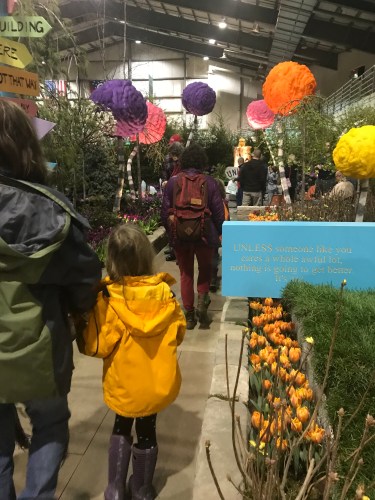
All that said, if you enjoy visiting conservatories, you’ll appreciate the picturebook-themed garden installations at the show this year. I can appreciate the effort the nurseries and landscapers put toward bringing these spaces to life inside the Ohio Expo Center.

IMG_0460

The Lorax garden installation. Mildly amusing, but not really useful as urban farming inspiration.

In the meantime, my friends and I will be dreaming up plans for a home and garden show befitting our kind. A good place to start would be visiting any number of farms and homesteads, like ours, that host open houses throughout the growing season. Stay tuned for updates on our 2018 open houses and Ohio-based events hosted by Ohio Ecological Food and Farm Association (OEFFA) and OSU Extension.


6 Comments

Columbus Home & Garden Show Giveaway!

The Columbus Dispatch sent me tickets give to readers for the 2018 Home and Garden Show (February 17-25 at the Ohio Expo Center). I haven’t been to the show before but there are some interesting events planned. I’ll plan on attending with some farm friends February 19th when the Columbus Metropolitan Library is on site for some special presentations. And I will be sure to share what I see and learn, here and on our Facebook page.

If you would like a pair (2) of tickets, leave a comment below sharing something new you plan to do in 2018 to connect you the local food system. Are you adding something new to your own food garden, joining a CSA (you can read about ours here), buying local meats and honey…

I select two winners at random on February 16th and arrange for ticket pick-up.

Looking forward to hearing all your plans!


Leave a comment

Top 40 Urban Gardening Blogs on the Planet

Groucho Marx famously declared he didn’t want to belong to any club that would have him as a member. In similar fashion, I’m not usually one for superlatives and am uncomfortable with praise, but every once in awhile it’s nice to be validated.

So, today we share the news that we were included Feedspot’s list of the 40 best blogs on the web about urban gardening. (We’ve made similar lists in the past. See, for example, 10 Urban Agriculture Projects Making a Difference in Columbus, OH).

urban_gardening_1000px

I appreciate Feedspot’s metrics and they give us some idea of what we’ve done well in the past with regard to sharing our work in the field with folks online. I know people around the world are reading about us through this blog and I hope we are inspiring others as we were inspired by our mentors (here in Columbus, across the country, and around the world.  The metrics (see blow) also serve as a reminder of what we need to do to keep our momentum going.

  • Google reputation and Google search ranking
  • Influence and popularity on Facebook, twitter and other social media sites
  • Quality and consistency of posts.
  • Feedspot’s editorial team and expert review

I promise to keep posting to this space and hope you will keep reading!


Leave a comment

Planning for the future, Looking back on the past

This time of year, backyard growers around these parts are starting to dream about getting our hands back in the soil. We are pouring over seed catalogues and planning our planting schedules. We’re also cleaning up messes left from last season and setting ourselves up for success in the new one. Around here, in the dead of winter, that means cleaning up the basement.

And so it was that I came across some garden plans Dan (also known to readers of this blog as The Spurgeon General) made for a garden back in 1994 in the liner notes for a record he put out with one of his bands – the cover was a painting of a farm issue license plate…


I knew I loved this guy and I knew he had some experience gardening when we first met, but I cherished reading these notes; a window into his life with plants before I knew him.  All these years later, tomatoes are still his favorite crop and we have a rototiller parked in the shed.

My own crop planning continues to evolve. In addition to planning for rotations and making sure I balance membership commitments and seed orders, I’m trying to get more sophisticated about tracking weather patterns and best planting days for different types of crops according to biodynamic calendars. I spent the last week of winter vacation comparing temperatures from last January and this one. This was my first observation for the new year.

26168397_1941247412802398_2944699520203172238_n

Things haven’t changed much yet, but they’re looking up and I’m hoping to get out to the high tunnel and seed some beds this weekend.


Leave a comment

Reflecting on Food security from a Jewish Perspective

Friday night I had the honor of participating in an interfaith panel on food security hosted by The Ohio State University Muslim Student Association. My fellow panelists were Sister Dorothy Hassan (Muslim community activist with My Project USA), Bryan Snyder (Director of OSU’s Initiative for Food and Agricultural Transformation who happened to train as a Christian pastor), and Michelle Kaiser (Professor of Social Work at OSU).

I felt a bit uneasy and ill-prepared to represent the Jewish perspective*, but found in my preparatory reflections, and even more so in sharing them during the event, that I had unique ideas worth sharing. As an urban farmer who thinks of her work, not always but at least sometimes, through a Jewish lens, I wrestled with the questions the panel posed as I pulled together my talking points. These included:

  1. How is food security assessed? What makes an entity “food secure?”
  2. What is the most common misconception surrounding this issue?
  3. How can a community mitigate the stigma surrounding food insecurity?
  4. How does religion aid you in approaching the prospect of food insecurity? (ex. Religiously approved food).
  5. What entity should spearhead the issue of food insecurity?

Honestly these aren’t the kinds of questions I think of regularly in relation to Over the Fence. Mostly when such questions come up I feel guilty that I’m not doing more to help increase healthy, fresh food access to people in Columbus who live on public assistance in food desserts. But thinking about them in relation to Judaism gave me new this to think about and goals to work towards.

All on the panel agreed that food security is not just about having access to calories, but a regularly balanced diet of quality foods. Currently, an overwhelming majority of the USDA budget pays for SNAP (Supplemental Nutrition Assistance Program, aka food stamps). Seems the USDA ought to be doing more to support entities like OSU and other land grant university’s extension offices, working in partnership with community organizations and farmers to produce more food on the local level. We all agreed that the industrial food system is broken. At Over the Fence we are experimenting with one model for growing food differently, in community, ensuring food security for those who participate in our CSA program in the form of access to high quality food from a known source.

I shared my sense of working in relationship with the natural world as it is informed by Jewish understandings and traditions which celebrate, for example, eating seasonally, attending to the phases of the moon, and recognizing the powerful importance of water. Jewish blessings over food often make mention of the source of particular ingredients in the food being blessed such as wine being the fruit of the vine. While I don’t say them regularly, I appreciate the potential of those blessings to remind us that food doesn’t come from the grocery store; it comes from the earth, with help from the farmers who send it to our plates. At least real food does.

The other thing I thought of as I prepared was the saying, “If you give a person a fish they’ll eat today, teach that person to fish and they will eat for a lifetime.” I did some digging and found that the original sentiment of the phrase, though not this familiar wording, dates back to a medieval rabbi, Maimonides (check out Quote Investigator for a complete discussion). As luck would have it, Maimonides, who was born in Spain, did a lot of his work as a physician and philosopher in Morocco and Egypt, working with Muslims as well as Jews. Seemed like the perfect person to talk about at this event.

Maimonides wrote about 8 levels of charity, the highest being helping someone in need help himself. Over time, his ideas were converted into the proverb we’re familiar with today. Seems pretty clear that more people would be more food secure if they controlled the knowledge and tools to produce their own food. I hope that as time goes on Over the Fence can extend our capacity to make that happen. I feel proud of the tours we give and this blog for sharing our work, but I would love to engage in more direct action towards fulfilling the educational aspect of our mission.

*If you’re interested in reading more on this see: “I’m Not Really A Chaplain, I Just Play One to Pay the Bills.”