Over the Fence Urban Farm

Cooperatively farming small patches of Earth in Columbus, OH


2 Comments

June 2023 – Catch Up Brain Dump

Well, it’s been six months since I wrote in this space.

I can’t remember how many times I’ve sat down and typed an opening line like this. Usually I delete them. It’s boring. Who wants to hear a writer lament about their inability to make time to write? Just write something already. But sometimes marking that time has passed you by is important.

Not because I feel guilty for not writing. Not because I think I owe anyone an apology. But because I’m sorry I haven’t been making time for it. Not because I think you, dear readers, are having trouble sleeping as you await my next offering. But because keeping this blog has been good for me.

It has given me space to document and reflect on starting and maintaining OTFUF for the past ten years.

It’s given me a place to store memories. To track the seasons. To track tasks. A space to return to when memory fails and I can’t remember what I did or how well (or poorly) something grew last season.

This blog has given me a platform to record, to share, and dare I say, to inspire.

Releasing myself from writing, from feeling self- or social media culture-imposed pressure to post, was part of my shmitah practice last year. And as a wise friend helped me realize, when you give yourself a sabbatical, when you truly take a break, you can’t expect to hit the ground running the next year. This aligns well with contemporary Jewish thought leaders advocating consideration of a shmita cycle, of a focus for each year in the seven year cycle. Something like: Dreaming and scheming, iteration, reflection, recalibration, reiteration, reflection, rest, repeat.

One thing I really let go of last year was the need to make plans. I spent time on the farm as time and energy allowed. I watched what came up from the soil on its own as much as, if not more than, I willed things to come up. And so I entered this season unsure what I was doing.

I did spend some of my leave reflecting on what I did not want to do anymore; what I was grateful to have a break from as well. as what I missed. Figuring out what comes next is slowly coming in to focus. Bit by bit.

The first decision I made was to suspend our CSA program indefinitely.

Starting the farm on a community supported agriculture model allowed OTFUF to get up and running without having to spend much of our own money for infrastructure or supplies. It would take me a minute to count how many truckloads of compost, water bills, seeds, gloves, and bags of chicken feed we’ve bought over the past 9 years. It’s been a lot, and nearly all of it was covered with funds from the CSA.

The first few years those who joined not only trusted us with their financial contributions, they gave us their time. In many ways that was more important, and more valuable, than cash. We built this place with all of you. And we grew an incredible amount of food those first few years because we did it together.

Over time, however, our original members started their own gardens and stopped coming around as often. New members didn’t have the same interest or commitment to the collective or the work. This impacted both my enthusiasm for filling CSA orders – I was always in it for the transformational potential, not the transactions – and my ability to do so. Working with fewer helping hands, the farm wasn’t as productive as it once was.

So no more CSA. At least for now. If I hear from some substantial number of people reading this far that you’d be excited to be part of something like that again, I’ll reconsider. I’ll rededicate myself to scheduling work sessions, making chore lists, and assigning tasks. For now, I’m enjoying the freedom to just watch the flowers grow and I’m thinking about investing more in perennial crops like berries that provide year-round pleasure.

The increasing unpredictability of the weather also contributed to my frustrations around the CSA. Heat at the wrong time. Never enough rain when we need it and too much when we don’t. The drought we’re experiencing now makes me grateful not to be beholden to anyone. At the same time as it makes me wish I had money in the bank to pay the water bills when they come due.

All this has me wondering whether the farm is still a farm.

Along with suspending the CSA and absolving myself of the pressure to post regularly to social media channels, I entered this season with no established plan or efforts to bring visitors to the farm. Given that, would it be better to think of myself again as a gardener, or homesteader? Is that all I want? For myself? For the space?

Rereading what I wrote in 2016 when I first embraced the title Urban Farmer, I guess most of it still fits. I’m growing more food than the average home gardener and our yard looks even less like our neighbors’ now than it did back then. But I’m not feeding others like I was back then. And I haven’t been invited to share the farm on any tours or actively recruited scouts and school groups to come visit. Then again, while it feels and looks like August, given the lack of rain over the past month and recent heat wave, the season’s just getting started.

Watch our social media streams for “flash farm sales” which we’ll host whenever we have an abundance. Sales will take place on site so folx who come by can see where the produce they purchase is being grown.

I’m also in conversation with Dr. Neraj Tayal about an Edible and Sustainable Backyards Hop here in Beechwold. If you or someone you know has a space that would make a good addition, please reach out!

Visiting Neraj’s space last season and hearing how much our work inspired his own is something I’ve been thinking about a lot. It demonstrates the power of having places like OTFUF in the community and the importance of inviting people in to see it. Over the Fence has always operated in a liminal space between community farm and private garden. We aren’t inherently public facing – not visible from the street or occupying a public space. People are always welcome, but you do need to request or have an invitation to visit.

I’m also continuing my work with the Ohio Ecological Food and Farm Association (OEFFA) on the Agriculture Resiliency Act. This marker bill for the 2023 Farm Bill draws attention to issues and efforts that can help make agriculture more sustainable, for people and the planet. This includes the promotion of soil health, increased investments in local regional food systems, addressing consolidation that is driving up prices and contributing to waste, and funding investments to support organic research and beginning and BIPOC farmers. You can learn more about OEFFA’s 2023 Farm Bill platform, hear from proud organic Ohio growers, and take action here.

So, I’ll try to get back to posting here a bit more regularly; to reflect and to share. I’m open to hearing what kind of content you’re most interested in – Reports from the Field, Tips You Can Use, Farmer Field Trips, Farming Advocacy… And I also reserve the right to post, or not post, whatever inspires me.

XO, Thanks for reading this far.
Jodi


Leave a comment

Farmer Field Trip: Stratford Ecological Center

I’m not traveling as I’d hoped this summer, but the time is flying by. A few weekends ago, I took advantage of an invitation from OEFFA (Ohio Ecological Food and Farm Association) to spend the day at Stratford Ecological Center in Delaware. If you haven’t been, you need to go. If you have, you probably need to go back.

Stratford was instrumental in my development as a farmer. I first learned about it when our older kids attended farm camp there, about 15 years ago. Despite its increasing popularity, the littlest was able to follow more recently. The drive up from Columbus isn’t short, about 30 minutes, but pleasant. About as closer to “a quick trip to the country” as you can get in Central Ohio without getting on the interstate. It used to be more quaint, but development has really changed to landscape between here and there over the past decade. In a way, all that building makes Stratford more special – 236 acres set aside to preserve nature and teach children (and their teachers and families) where food and fiber come from.

When you arrive, you enter through Stratford State Nature Preserve: 60-some-odd acres of woodland set aside to do what it will. Cruising through the narrow, winding road, you feel hugged by the trees and your blood pressure drops. After a few minutes, you emerge on the farm fields under big open sky. Depending on the year and the season, might be planted with hay, sunflowers, and other tall large field crops.

Walking around, you’ll meet the flock of chickens who live amidst the apple trees, pass through the high tunnel (the first I’d ever seen and still one of the prettiest) tasting greens, and pet sheep, llamas, pigs, and other mammalian livestock. Also on display are an edible rain garden, straw bale building, and . In the winter, the sugar shack is humming, converting countless gallons of sap into maple syrup.

The purpose of my visit this summer was to tour the farm with Jeff Dickinson, Farmscaper at Stratford since its founding in 1990, learn about the Agriculture Resilience Act (ARA) – a marker bill designed to get Congress thinking more about the connections between farming and climate, and help participants digest the lessons we learned through some creative activities leading up to contacting our legislators asking them to support the ARA.

“The Agriculture Resilience Act will expand resources for sustainable farmers working hard to build healthy soils and fight climate change, building on six key focus areas: increasing investment in agricultural research, improving soil health, supporting the transition to pasture-based livestock, ensuring farmland preservation and viability, promoting on-farm renewable energy production, and reducing food waste.” (OEFFA, April 22, 2022)

I learned a lot during the legislative briefing and participated in good conversations that got me energized to make some phone calls, send postcards to my representatives, and educate others about how sustainable farming can help mitigate climate change. I’ll post again with more specifics there. In the meantime, read up on the bill through the link above and consider picking an issue that resonates with you. Contact your legislator, talk to your neighbors about it, and write to your local newspaper editors.


1 Comment

Follow-up on The Columbus Dispatch Home and Garden Show

Last week I was offered tickets to attend the Home and Garden Show and to give tickets away to readers of this blog. (To see my original giveaway post, click here.)  Thanks to all who left comments. I’m excited to hear how your plans and commitments to local food systems progress this season! In this addendum, I wanted to share my brief review of the show based on my experience attending this past Monday with some friends of the farm and our children.

In a nutshell: 
Chances are, if you are reading this blog you shouldn’t go to the home and garden show.

I should have predicted this based on the show’s sponsors, but I like to think of myself as someone who’ll try anything once. In short, this is a trade show not befitting DIY homsteaders or urban farmers. It’s a place for people to find others to build and plant things for them and there was little to no mention of sustainable gardening practices, planting with native species, or growing fruits and vegetables. So do yourself a favor, and stay home and get to work!

All that said, if you enjoy visiting conservatories, you’ll appreciate the picturebook-themed garden installations at the show this year. I can appreciate the effort the nurseries and landscapers put toward bringing these spaces to life inside the Ohio Expo Center.

IMG_0460

The Lorax garden installation. Mildly amusing, but not really useful as urban farming inspiration.

In the meantime, my friends and I will be dreaming up plans for a home and garden show befitting our kind. A good place to start would be visiting any number of farms and homesteads, like ours, that host open houses throughout the growing season. Stay tuned for updates on our 2018 open houses and Ohio-based events hosted by Ohio Ecological Food and Farm Association (OEFFA) and OSU Extension.


Leave a comment

OEFFA Conference 2017

This was my second year attending the Ohio Ecological Food and Farm Association  conference. I was invited last year to host a children’s workshop and got my entrance fee covered as a volunteer. I spent that day sitting side-by-side with large and small scale, rural and urban growers learning about various aspects of growing food organically. I was hooked.

Last year the conference was at Granville High School. Granville is a small town known as the home of Dennison University a small liberal arts school. I don’t really know much about the town other than it’s in a beautiful setting and full of homes that remind me of New England. It’s a high-end real estate market with a school to reflects the resources it has available. A large garden on the grounds is maintained by one of the teachers and his students. The school has its own chef who includes ingredients grown in the garden in his menus. The students eat with metal silverware off ceramic plates, glassware, and reusable lunch trays. Anyone who has been in a public school in the U.S. in the past few decades knows this is very rare. Many kids these days are being offered free and reduced lunches that don’t look much different from what’s served in prison off styrofoam trays that they through away after every meal. It’s a disgrace on too many levels to get into here.

Granville high reflected the values of OEFFA and the conference. This year, however, in an effort to accommodate more people the conference was moved to the Dayton Convention Center. In that setting it lost its small scale charm and sense that it is doing something differently. I’ve been to lots of conferences in convention centers and all the centers feel the same – oversized, anonymous, depressing… To make matters worse, OSU Extension was offering a pesticide application program at the center on Friday. The irony was not lost on any of us. It was hard not to imagine this is what it would have been like if Sanders and Trump had held rallies in the same place at the same time.


I don’t have a solution for this problem and I’m not saying this as criticism. It is meant as a candid critique in hopes that perhaps it will be somewhere else next year. It’s great that the conference is growing! But is there someplace we can grow that might better reflect OEFFA standards?
img_1842
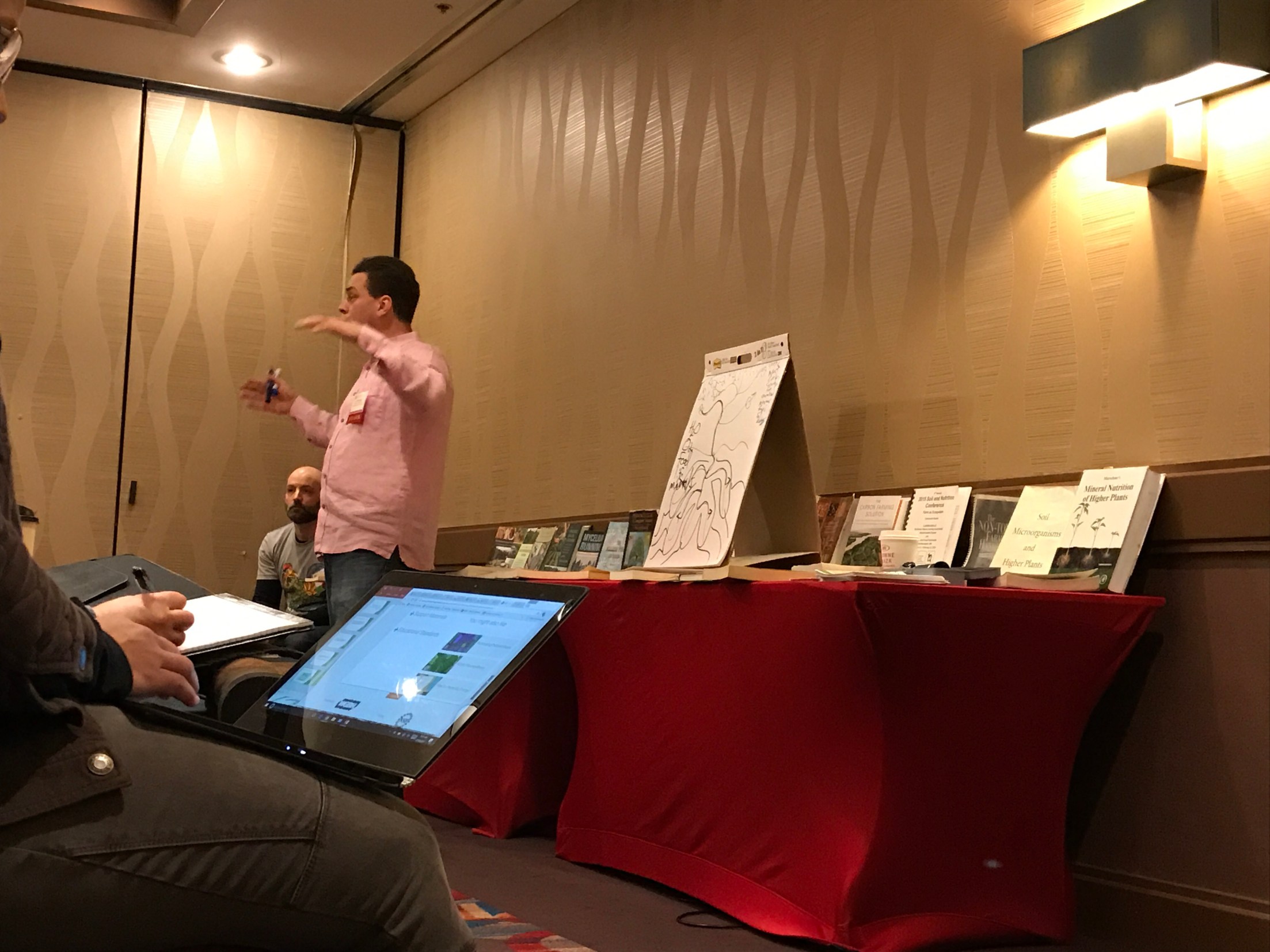
I spent three hours Friday morning listening to Dan Kittredge talk about biological systems and creating healthy ecologies for soil, plants, and humans on our farms. While a lot of the concepts he talked about were not new to me, he spoke about them in new ways–mixing scientific knowledge with a deep understanding and respect for the development of human life, as well as plant life, and making comparisons between the two that anyone could understand. They got under my skin. By the end of his sessions, I was ready to run home and get working on new experiments with the land instead of just on my land.


Here are a couple of key concepts and quotations Kittredge presented that might get you inspired. I encourage you to check out the Bionutrient Food Association he helped found for more information on his philosophy and approach to farming.

On monocropping he asked “Is it good for all six-year-olds, or 12-year-olds for that matter, to be sitting in a row alone all doing the same thing removed from society?” Those who know me know that I am deeply skeptical of the prevailing educational model currently being employed in this country. Thinking about my plants and their relationship to the environment they’re growing in and how they collaborate and work together is something I’m going to give a lot more thought to. I started some new experiments with cover crops this past fall and Kittredge’s idea of maintaining them alongside, and in some cases up against the cultivated plants has me thinking about what’s next.

img_1847

Kittredge emphasized the importance of how plants are treated at the beginning of their lives in relation to how they will do later on. He compared mineral inoculants offered to seeds before they’re planted to the colostrum breast-feeding mothers gift their babies upon birth. In each case, each supplement, help develop digestive capabilities. He questioned the use of cell trays. And asked “Would you put a child in a cell? What happens when you put a child in a cell?”


Kittredge shared a lot of information on both political and economic history of agribusiness. He added so much to the scaffolding I’ve been building on this subject, the fears I’ve been harboring about our food system, and what we might do to change them. Decades ago, Rachel Carson documented ways the government transferred World War II biological weapons research to the production of insecticides and herbicides. Kittredge reported they also started funding research at land-grant universities and directed those research projects in order to promote the use of fertilizers, pesticides, and insecticides in a vicious cycle that strips the land of its lifeforce. This has made the US farmers, as a whole, more dependent on the companies that sell fertilizers another artificial inputs and control measures and reduced the quality of the food supply, making us sick. Kittredge suggested, health care costs, not military or infrastructure spending is what will bankrupt our country. If, as Hippocrates taught and Kittredge reminded, we thought of and raised food to be our medicine, we wouldn’t might not get sick in the first place.


I spent lunchtime meeting with Gina Freeman who has run a “Giving Garden” program at the Columbus Jewish Day School in New Albany for the past few years. The program is funded by a grant from the Columbus Jewish Foundation for community partnerships. She and her students harvest the food they grow and deliver it to various residential facilities and shelters around Columbus. She’s a friend of a friend whom I was very happy to meet and share ideas for the future with over an amazing, locally-sourced meal.

img_1875

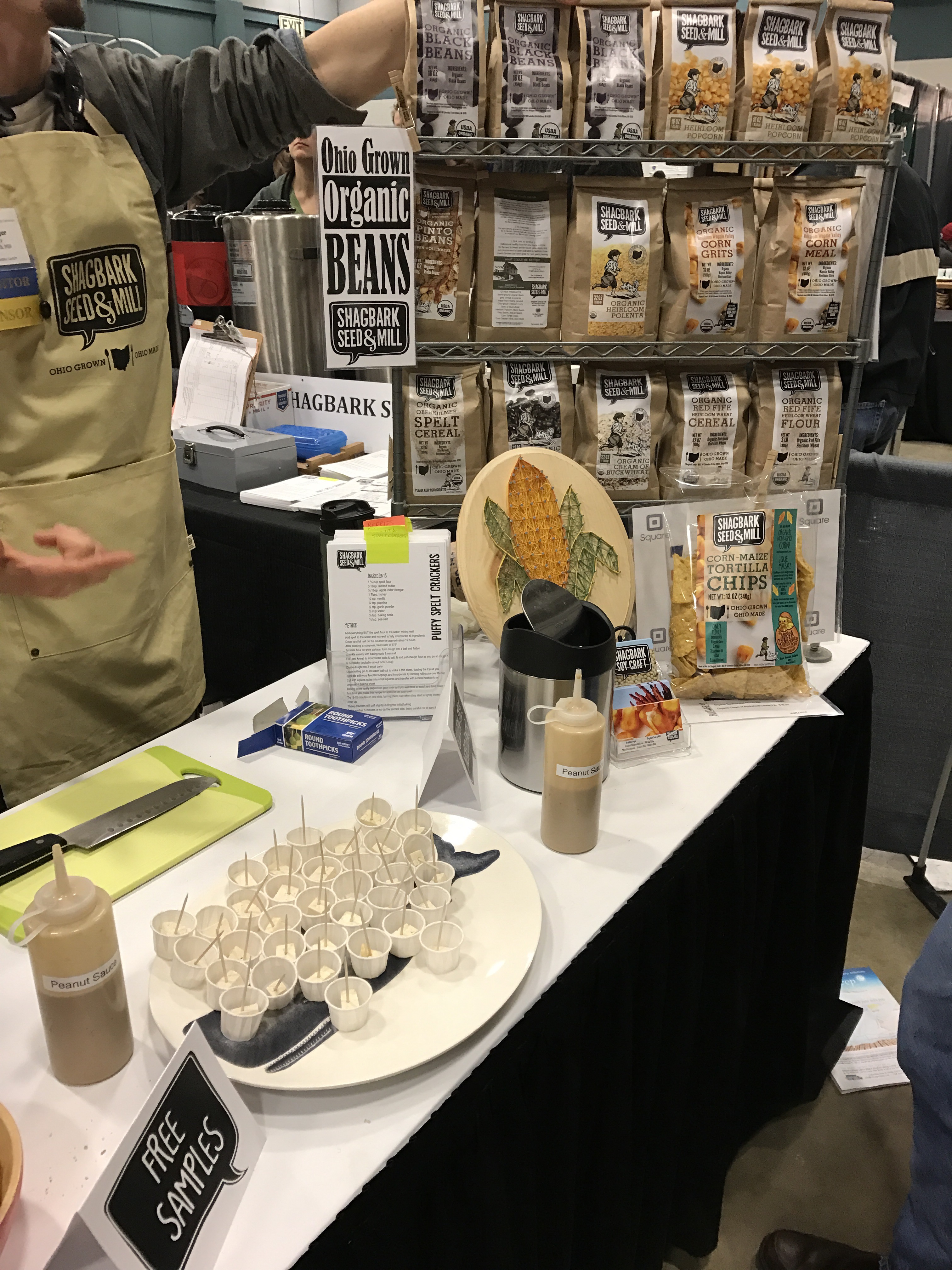
After lunch I walked around the exhibitions hall. Sampled some tofu coming soon from Shagbark Seed & Mill (!) and spoke with some vendors about soil testing, seed saving, and mineral amendments.

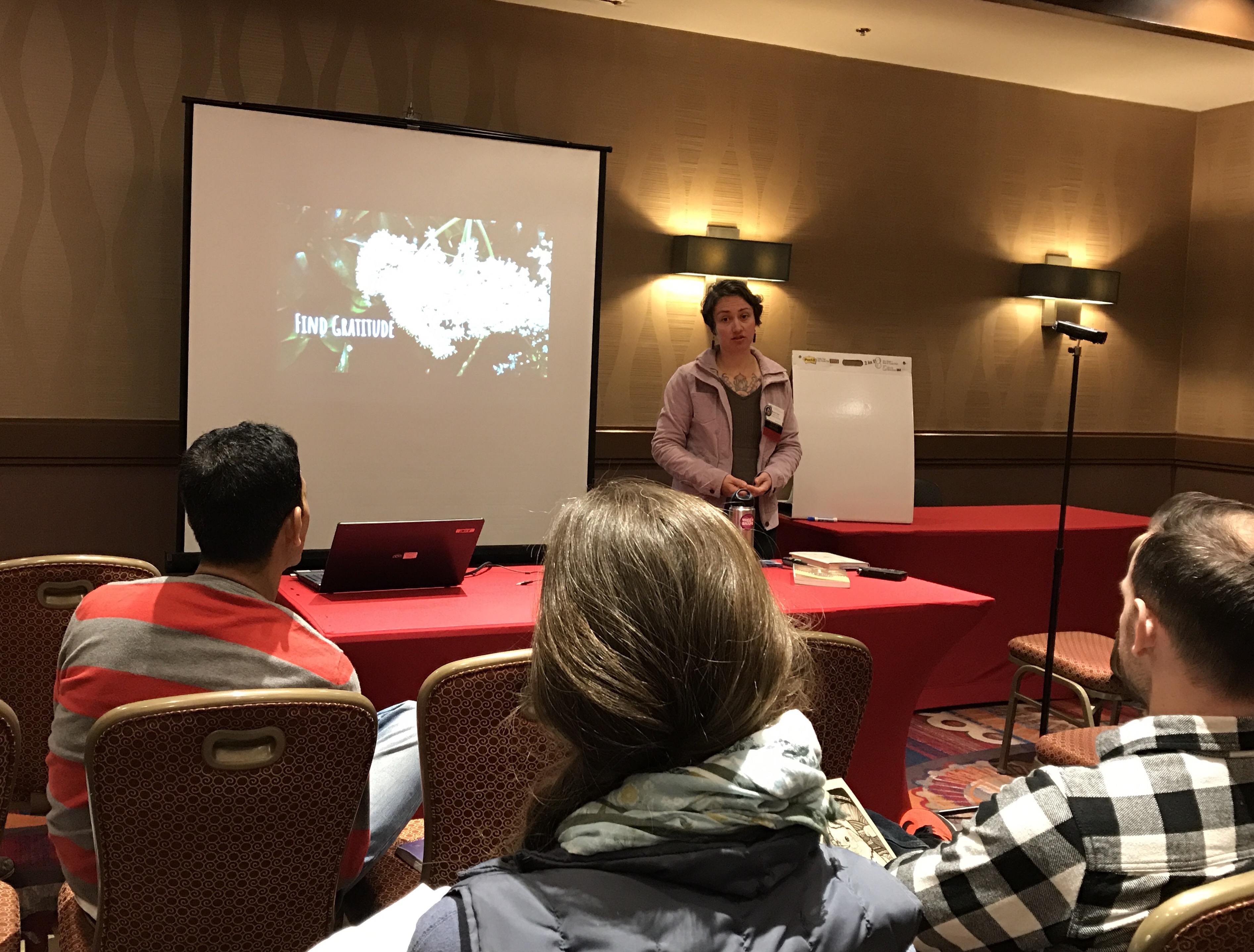
After lunch I jumped around between a few sessions – one on cover cropping in community gardens, another on growing tomatoes in high tunnels, and finally to my femfarming friend Rachel Tayse’s presentation on Mindful Growing.


I look forward to talking with her more about the ideas she shared and my own interests in bringing mindfulness to my farming practices. I have written about the repetitive practices of some contemporary artist that I love and how they help me think about my work with the land as a creative practice. I feel like there’s a lot more room to explore a synergy between creative practices in the art studio and creative work on the farm. In addition, I’m interested in exploring farm work in relation to Jewish mysticism.

My final time at the conference on Friday was spent leading a workshop on rock painting with insects for about a dozen 6 to 10-year-olds. By the time I got to them at 4 PM, the children were bouncing off the walls. They were all eager to paint the rocks. But only a few of them painted insects. He’s one of my favorites.


Saturday morning I attended a session with Jim Riddle, whom the OEFFA conference catalog listed as “a 30 year veteran organic farmer, inspector, educator, policy analyst, and activist,” titled “An Agenda for Organic America.” Riddle was the keynote speaker Friday afternoon, but I missed his talk due to my volunteer shift. Riddle’s talk was based in his experiences as an organic fruit farmer and former member of the US Department of Agriculture National Organic Standards Board. The content of presentation could easily be its own post.

He presented the agenda for the session was: gains, stop bad things, build on success, what we need, and what you can do. As he presented this list, however, he acknowledged that these categories of information are not divorced from one another. Here’s an example.

Start with this gain: A new Organic Farmers Association group is going to be formed out of a Rodale Institute initiative and the Organic Farmers Alliance. Riddle highlighted that this will be a farmer-led interest group serving on behalf of farmers themselves, not industry lobbies which speak in favor of increasing organic consumption with little regard for production. Shift to stopping this bad thing: With farmers largely absent from policy conversations in the past, the size of the organic market grew built on the backs of foreign imports. International imports are not held to the same standards as US products. Some might be higher, some lower. But the regulations do not require imports to be labeled as specifically as homegrown organics, there is no traceability. Not only does this mean that we don’t really know what were eating, but it also depresses prices and market share for US growers who have to keep lots of records and pay lots of fees to be certified organic.

Riddle suggest that we build on successes like relationship marketing like “Know your farmer” projects. This is an idea Over the Fence Urban Farm is built. I hope that following our story will inspire folks, whether they are part of our CSA or not, to seek out the stories behind what they are eating. This also seems to be the only way to REALLY know what you are putting in your bodies.  Riddle argues we need more advocacy – through regional farm bureaus, letters to the editor, and educational initiatives like farm-to-school programming – to highlight the relationship between human health and planetary health as well as providing more funds for those who want to transition to organic from conventional farming. This was a perfect lead into keynote speaker Robin O’Brien.


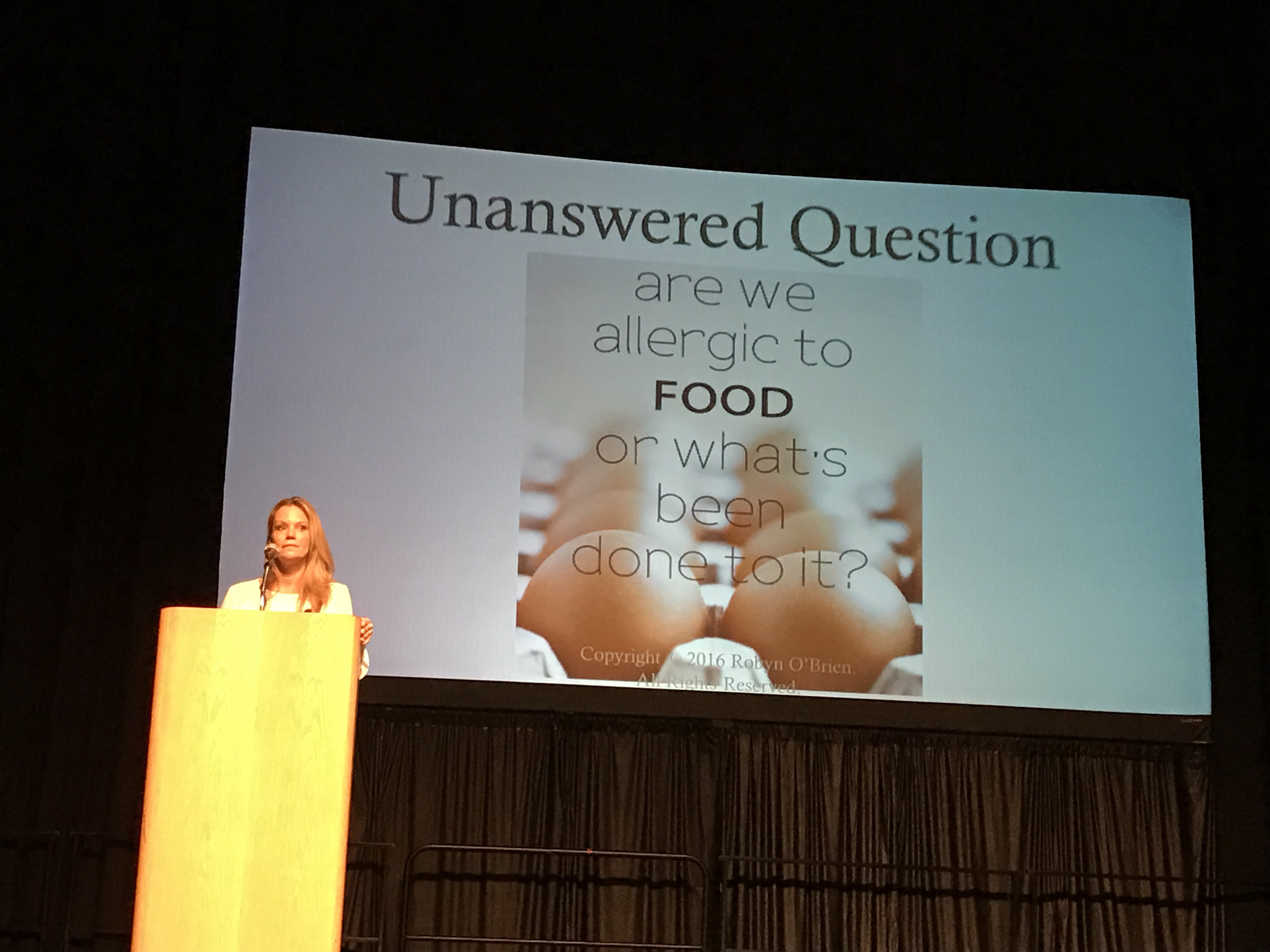
O’Brien spoke from her experience growing up in an extremely patriotic Texas family. It was America first all the way, she said. She went to business school and became a Wall Street analyst with a focus on the food industry. She watched the organic movement growing in the early 1990s, but just thought of it as a good marketing idea.

She had her come to Jesus moment after one of her children had an allergic reaction to something he ate. This tipped her off to the fact that not all food is created equal and that we’re not really sure what the foods that are genetically modified or consuming are actually doing to our bodies. She did research on GMOs and Monsanto and found a correlation between the number of hospital visits for children with food allergy reactions and the rise of Monsanto in the mid-90s. Building on her business experience and relationships, she got the ear of many executives and politicians who were willing to listen to her and shared that they also feared what they were selling and didn’t want their families to eat it.

Much of what she shared about GMOs and related pesticides was not new information for those in the room. As organic growers and consumers we already new about the proven and yet-to-be researched risks of GMOs on human people and the planet. But O’Brien brings lots of incredible statistics to the table about corporations like General Mills and Kellogg buying small companies like Annie’s and Kashi and then struggling to scale-up production using USDA organic raw ingredients like corn, soy, and wheat. We are currently importing large more than half of these from other countries. (Note how this links back to Riddle, above.) The good news, these corporations are now putting money towards helping American farmers transition to growing more organics so they don’t have to import them. While the news wasn’t all good, O’Brien suggested the time is ripe for Washington to pay attention to organics, and build on the new president’s “America First” and job creation focii.

I spent a few more hours in the exhibition hall and communing with Central Ohio femfarmer friends over lunch before heading home. All in all, it was a great weekend that got me revved up for the 2017 season!


Leave a comment

Jodi Kushins, Urban Farmer

[NOTE: February 27, 2020. Just re-read this post. So many things I could respond to, correct, extrapolate and report on. Maybe soon. For now, just a note to acknowledge this was written by a “younger” me.]

I was recently asked to consider the following questions as part of the Ohio Ecological Food and Farm Association’s (OEFFA) Women Grow Ohio project. The group’s leaders are putting together a website and plans for a second annual farm tour and wanted input from urban growers to balance out the voices of those in more bucolic settings.

How do you view your title? Are you an urban farmer, homesteader, grower, livestock farmer, gardener, or something other?

The responses shared by others before me were so eloquent. So beautiful. So confident. I felt not only at a loss for words, but humbled to be included in their group.

See this response from Sarah Campbell Taylor, for example:

Well we do call our business Jedidiah Farm. But at the risk of sounding contrary… Even though I grow on a larger suburban plot and do sell my products I don’t consider myself a farmer. I feel like throughout history and even now in many places people have done what I do- working hard to nourish themselves and others, sharing the bounty of their harvest with their community- and not necessarily considered themselves farmers. Maybe because it was just a way of life and didn’t really need a name? I hope that what I am doing won’t be unique for long, and that even people who don’t aspire to be farmers can see something in my lifestyle that they can envision for themselves.

Things I consider myself:
A mom who loves good eats.
A producer.
A revolutionary (I hope?)
A gardener/orchardist/goatherd[er]!
An experimentalist.
A person with a conscience.

You know the saying “if you want something done right, do it yourself.”? Well I love food. So I grow it and I share it.

When asked if she’d describe her approach “a homesteading lifestyle”, she responded:

Our lifestyle definitely includes homesteading, but I don’t think it encompasses the scope of what we are trying to accomplish because homesteading focuses on self-sufficiency while we our interests lean more towards sustainability, stewardship, community building and regenerative living.

Like Sarah, I named our project Over the Fence Urban Farm but felt a little funny about it for the first few years. Ultimately I called it a farm because it sounded better than Over the Fence Urban Garden. I second guessed my decision repeatedly and felt like a bit of a fraud when visiting larger operations. But, after a few weeks of thinking and living with this question, I am happy to call myself an urban farmer. Here are a few things that ran through my mind that helped me come to this conclusion.

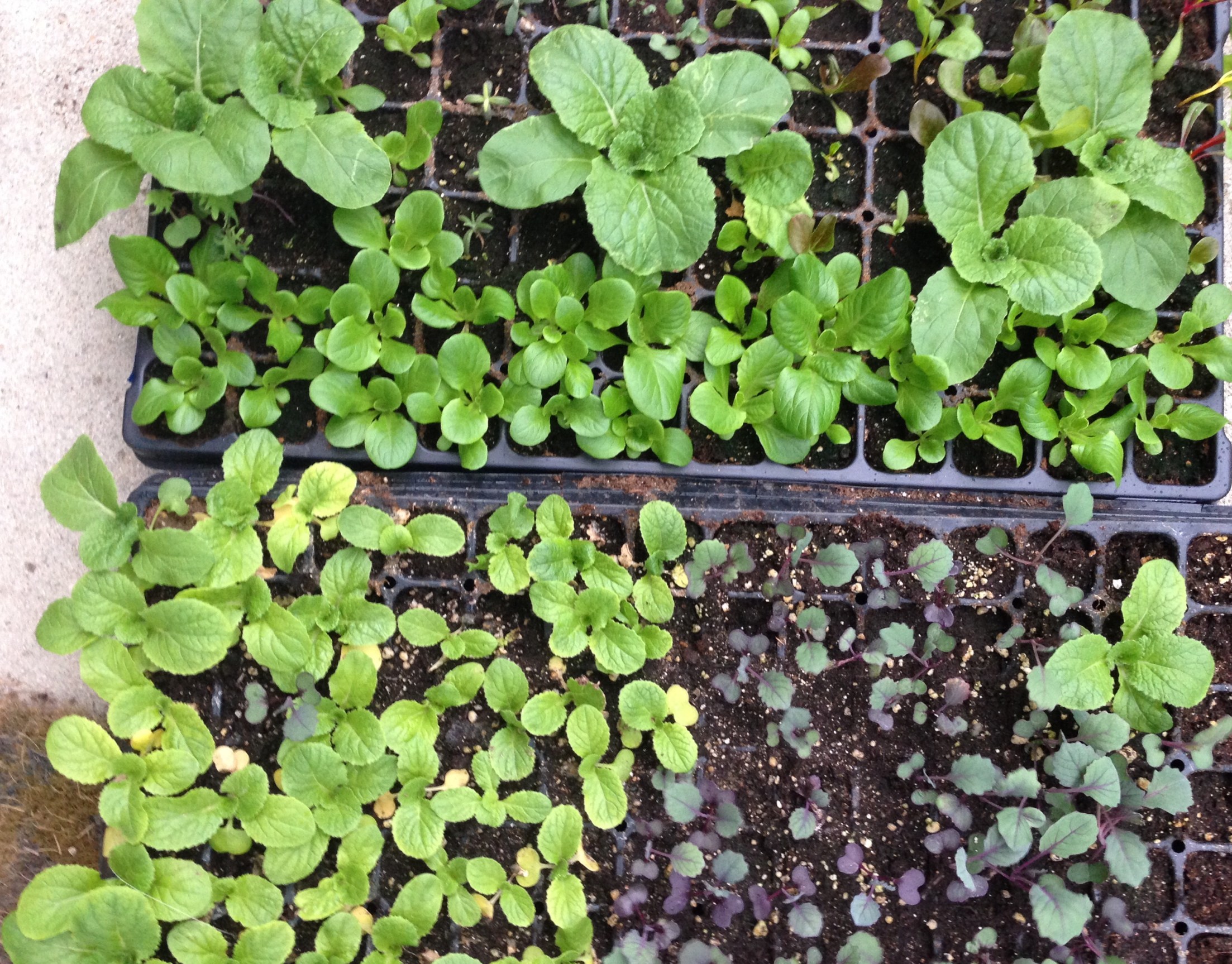
After hardening off hundreds of spring greens seedlings, I started sprouting another few more hundred.

FullSizeRender-2

Spring Greens Seedlings, Round 2

My yard doesn’t look anything like the (sub)urban lots around me. It looks like a farm. A small farm, yes, but a farm nonetheless.

DSC_0312

Through my efforts I am feeding others. Our small, backyard CSA fed 20 families last season. Granted, we didn’t meet all of their produce needs, but we made a healthy contribution.

DSC_0033

In the end, like Jedidiah Farm Over the Fence is not just about growing good food. I often refer to it as a community kitchen garden and feeding ourselves and others is certainly at the top of our agenda. But a large part of our mission is developing healthy soil and beneficial insect habitat, educating others to better grow their own gardens, and creative community building (see more on this in “Art Education in My Backyard: Creative Placemaking on an Urban Farm.” I don’t think these things are exclusive of being a farmer. To suggest otherwise ignores the role farmers play in our lives, communities, and ecosystems.